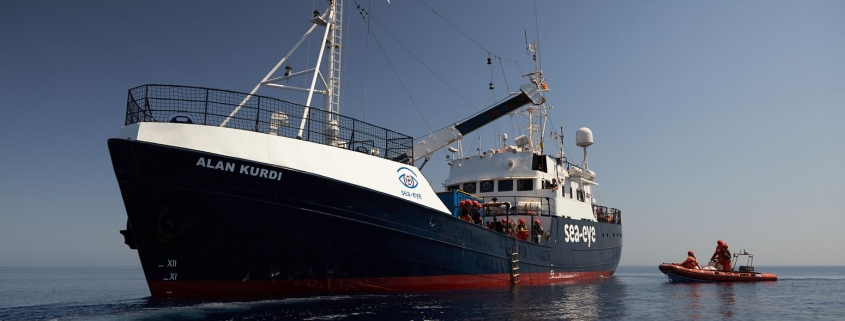
ALAN KURDI in the Mediterranean

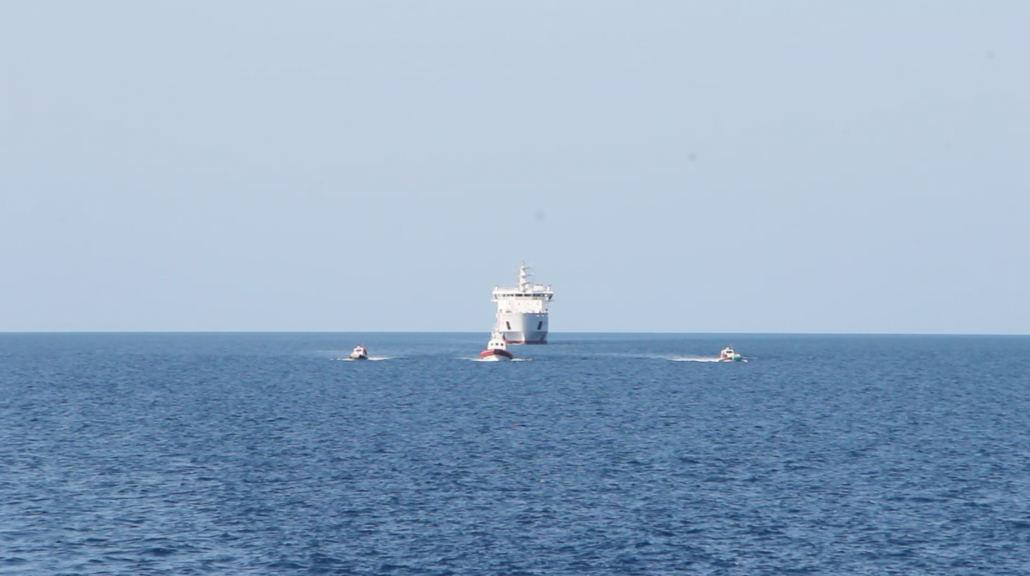
Quarantine ship RAFFAELE RUBATTINO also moored on Monday morning

  • Odyssey of the ALAN KURDI ends after 36 days at sea
  • Crew is tested for COVID-19
  • The most laborious mission for the Regensburg sea rescuers so far
  • Quarantine ship RAFFAELE RUBATTINO docks in Palermo
  • Distribution of people saved remains unclear

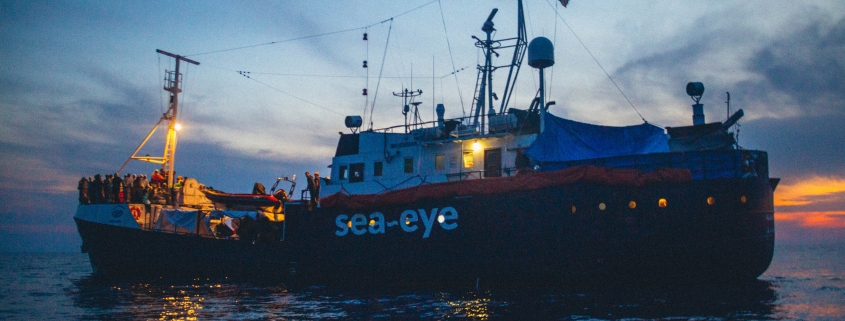
The odyssey of the ALAN KURDI ended Monday morning in the port of Palermo. A 14-day quarantine was previously ordered for the crew, which had to be completed in the Bay of Palermo. The 17 crew members now spent a total of 36 days at sea.

Crew is tested for COVID-19

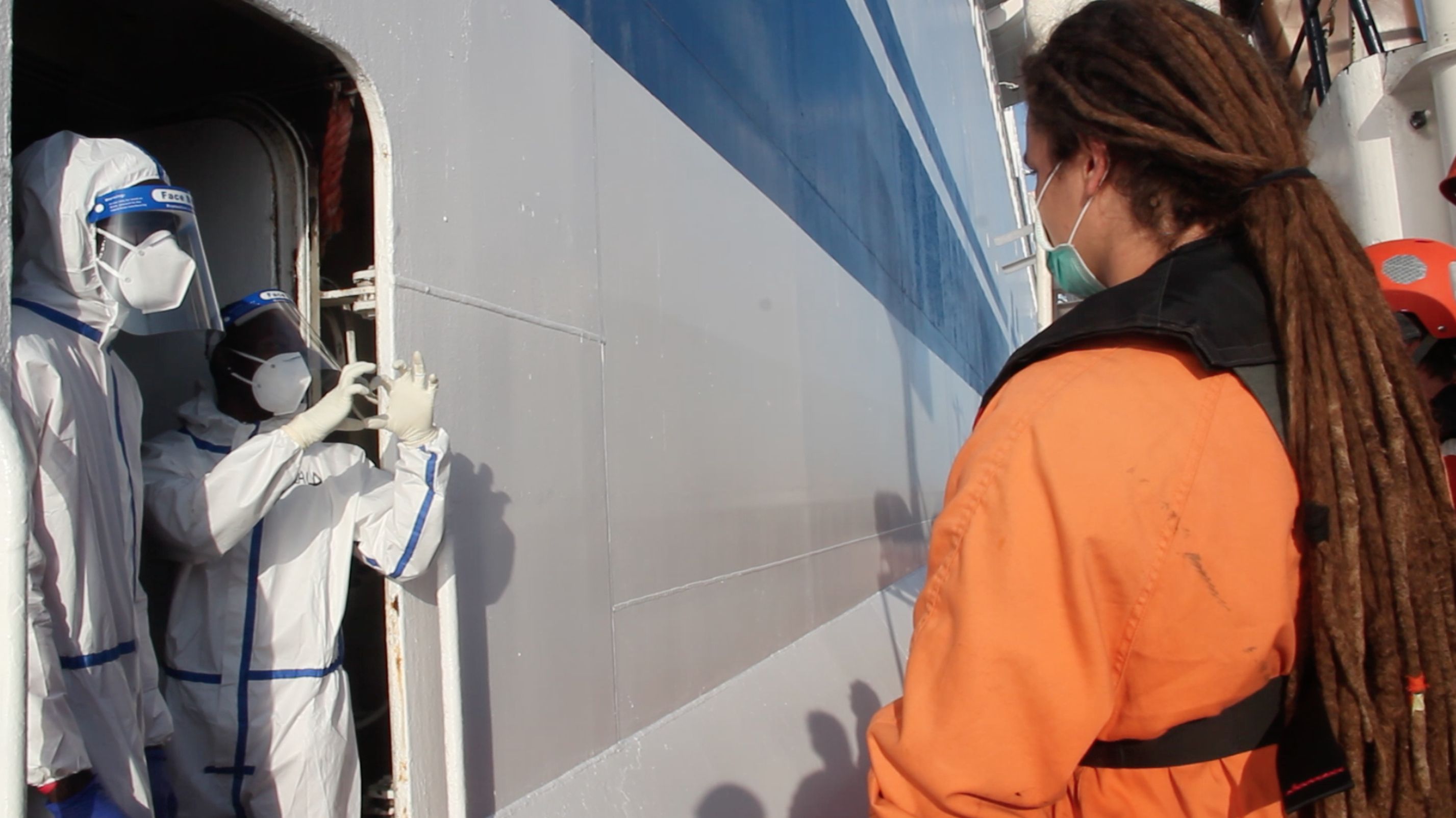
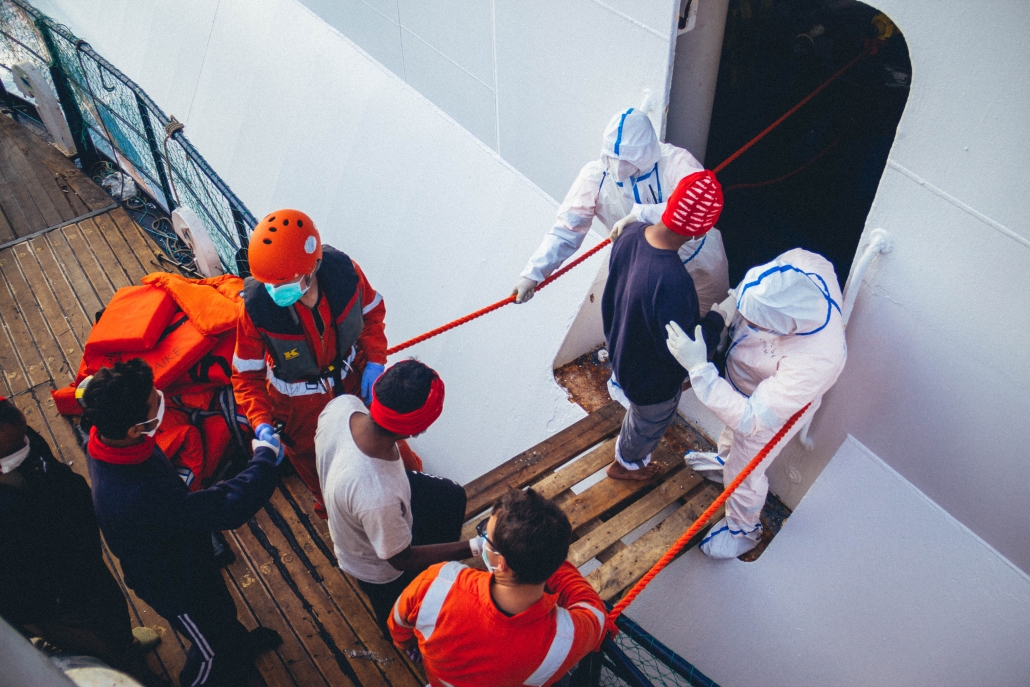
Upon arrival at the port of Palermo, the crew underwent COVID-19 testing. The crew must not leave the ship until the test results are available. The crew will then thoroughly clean the entire ship. An Italian company will then disinfect the ALAN KURDI according to official instructions. The Sea-Eye crew management will then support each of the crew members individually with regards to the return to their home countries of Germany, France, Spain and Austria.

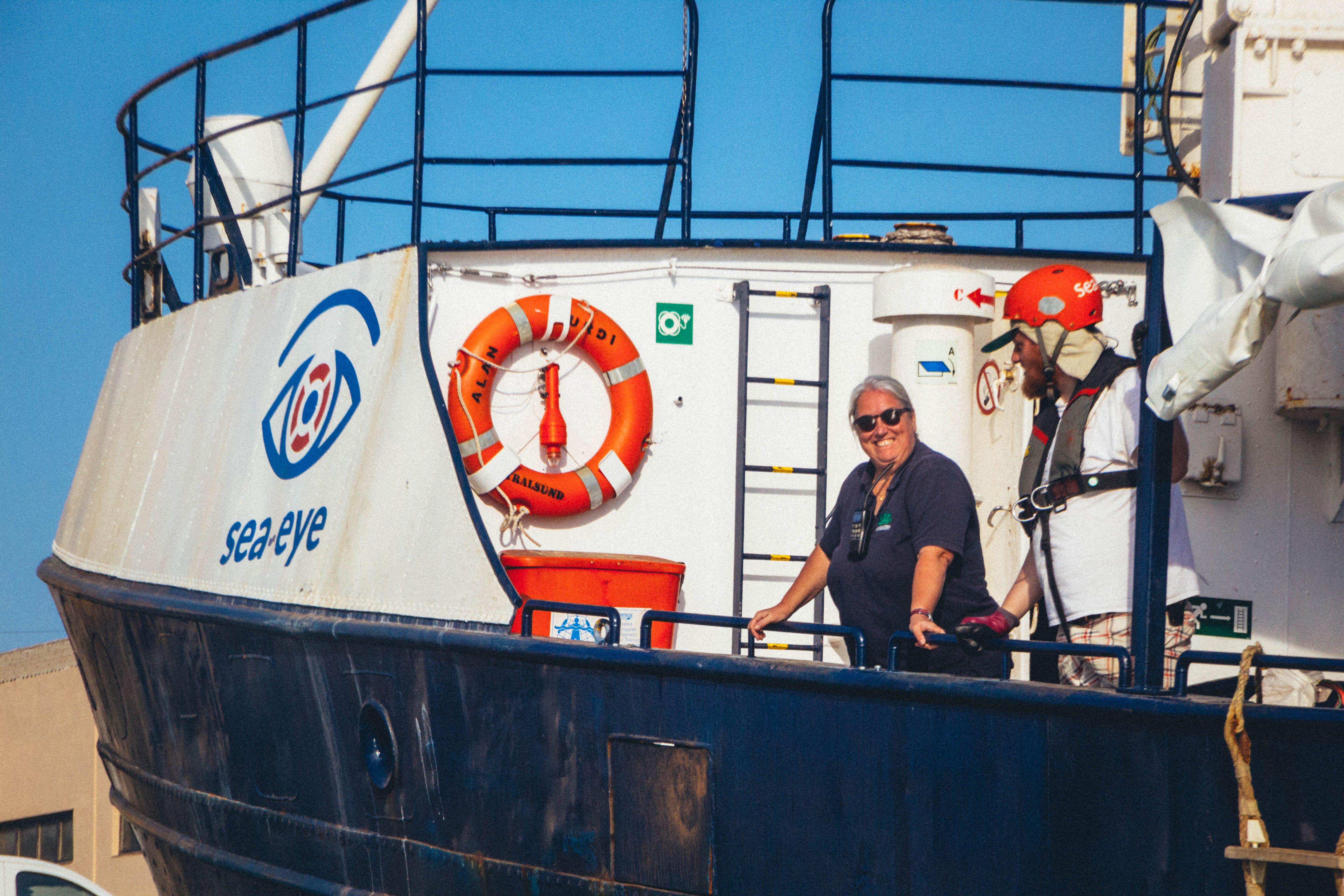
Crew of the ALAN KURDI in Palermo

The most laborious mission for the Regensburg sea rescuers so far

The mission lasted a total of 8 weeks. It is the most complex and laborious operation that the Regensburg sea rescuers have carried out so far.

The ALAN KURDI has never had so many people on board for so long. No crew had to take care of more people and we never had to use so many resources for a mission. These are sad records,” says Gorden Isler, Chairman of Sea-Eye e. V.

Sea-Eye received support from the United 4 Rescue Alliance (founded by the Evangelical Church in Germany), which paid for the high costs caused by the long blockade. The Endowment Fund for Civil Sea Rescue, initiated by Jan Böhmermann and Klaas Heufer-Umlauf, will also help Sea-Eye to ensure the next mission of the ALAN KURDI.

“The solidarity with our crew and the people saved was incredible. We are grateful for that. This is the only way for civilian actors to master the demanding task of sea rescue,” adds Isler.

Quarantine ship RAFFAELE RUBATTINO docks in Palermo

The Spanish rescue ship AITA MARI and the Italian ferry RAFFAELE RUBATTINO, on which the rescued people of both ships were cared for by the Italian Red Cross, were also allowed to moor on Monday morning.

Quarantine ship: RAFFAELE RUBATTINO in Palermo

Distribution of people saved remains unclear

How things will continue for the people rescued by the ALAN KURDI still remains unclear. The Federal Minister of the Interior announced on Sunday that so far, only Germany has agreed to take in refugees.

“It’s hard to imagine that European interior ministers will have to discuss and negotiate over 150 individual fates. First the BMI asked us to stop the rescues, now negotiations have to be held again at a European level, for a mere 150 people. In Germany there are 150 cities that are ready to offer their help and take people in. The simple question of distributing the rescued people is being unnecessarily politically exaggerated and exploited yet again,” said Julian Pahlke, spokesman for Sea-Eye e. V.
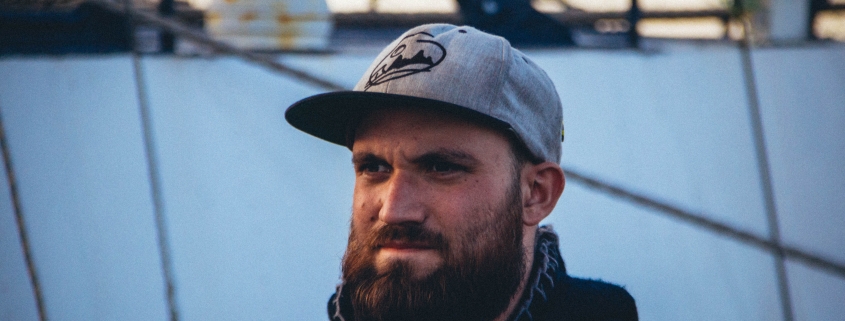
Our human rights observer Stephen

Interview with Stephen, human rights observer on board the ALAN KURDI

Human rights observer aboard the ALAN KURDI. What does this job entail?

The human rights observer has essentially multiple tasks. The first task is normal shift operations: being on guard duty, cooking food, all those tasks on board that all crew members do.

During a rescue, the human rights observer documents the operation. Every detail is kept in minutes: When was which e-mail sent to the authorities, who communicated what via radio? This serves the documentation of the events, should any judicial conflicts arise for whatever reasons. Where the rescue happened and how many persons were rescued needs to be precisely recorded.

For this, we make photos and audio recordings and supplement them with our notes. As indicated by the title of the human rights observer, I put special emphasis on the human rights situation. Especially when Libyan boats show up to the location of the rescue, this can be decisive. How to the different actors behave, do all adhere to the applicable laws? This can also concern the own crew.

The third task consists of collecting information about the human rights situation on the flight routes and in the countries of origin. For this, I conduct interviews and ask the people what happened to them and about their reasons for fleeing. Sometimes, the medical team makes me aware of clear signs of torture. If the person expresses the need to document their experiences and to have a conversation, I offer an interview and try to learn what happened.

These human rights violations must be documented and finally made public.

Militias disrupt rescue operation

How do you cope with these experiences personally?

As long as I am on board of the ALAN KURDI, there is no proper processing happening for me, I am not that far yet. For the time after the mission I have my own techniques that I developed in similar positions, for example in Ghana. Among them are music, sports and meditation to process these things.

Other organisations such as Repubblika document sometimes unimaginably cruel torture inflicted upon refugees. What do the guests tell you?

The stories I am told almost always start in the moment when people leave their country. They tell of arbitrary arrests, corruption, of human trafficking. But the focus of their escape stories lies mostly on Libya and the detention camps there. On this mission, I have heard a lot about forced labour, torture and human trafficking. Many were threatened in order to extort money from them and their families. Almost everyone mentions this. In addition, there are stories about human rights abuses they witnessed, how people were randomly shot or left in the desert. Some report sexual violence – basically, the entire range of human rights abuses one can imagine. All of this, people recounted in these interviews. Due to the tense situation on board, I had little time for these interviews. But what I heard was more than enough.

When hearing of all these cruelties and having to document then, how sensitively do you react to the argument, that the people are to be sent back to Libya?

This is indeed an argumentation that drives me furious. Most fleeing people do not originally come from Libya but have fled via Libya. Some had migrated to Libya for work. With the intensification of the conflict in Libya, the return route to their home countries is severed. Some have raised a lot of money for their flight and then experienced horrors.

Many have boarded a seaworthy boat with the certainty that this journey can lead to death. And they were forced to do it anyway, because the situation in Libya is unbearable.

The pushbacks conducted by Malta make me speechless. There is no argument that speaks in favour for returning these people to Libya. These people flee from violence, exploitation and torture. Some say they would rather die than return to Libya. Yes, it is true, I do react sensitively.

What do you think awaits refugees in Libya?

That is indeed hard to say in the times of Corona. Because also Libyan ports are barred, and refugees were returned on the behest of Malta by third parties, not by Libya’s own coast guard or Libyan militias. But I could reconstruct from the interviews that people are imprisoned again and brought back to the detention camps, from where they can only escape, if they raise very high amounts of money. Or they remain there for a very long time.

Our human rights observer Stephen

Sea rescues in the times of corona. What would be your solution?

Corona is not an argument to stop sea rescues. After all, people are also rescued from drowning in a public swimming lake without asking beforehand whether they are maybe infected with COVID-19. At the moment, it is made infinitely difficult for us to save lives. This will probably not change anytime soon. It is likely that rescued people will be, like in our current mission, provisionally moved onto ferries and distributed to different countries after a quarantine. The crews of rescue ships also need to go into a 14-day quarantine after a mission. Sea rescues are slowed down, they are made more difficult, but not yet impossible. Even though it was unnecessary that we were confined again for 14 days. We were already isolated for 12 days with the refugees at sea. All corona-tests of our guests had been already assessed as negatives on the quarantine ship. In addition, we had been already 11 days isolated at sea beforehand with refugees on board.

14 days quarantine, 14 days inactivity. What is the first thing you do when this period is over?

That is a good question. First, I have to find a way back to Germany, which will not be that easy during these times.

Is there a return for you to the ALAN KURDI?

Definitely. It was the first mission for me, and I did not know exactly what I was in for. Of course there were moments of tension, but an amazing crew made it worth it.

(Interview: Martin Geiger)

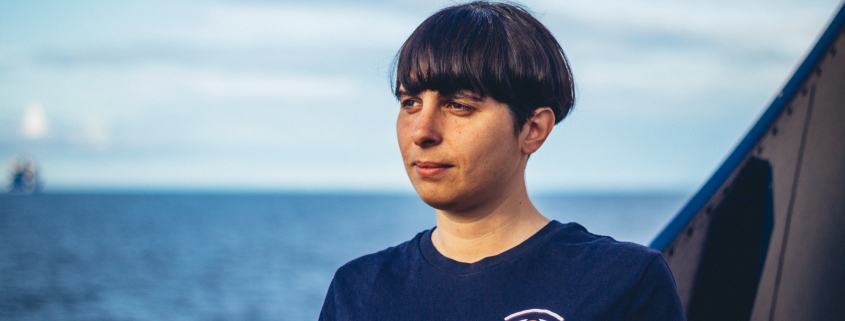
Our captain Bärbel

Interview with Bärbel, Captain of the ALAN KURDI

Whenever I think of you, the old german nursery rhyme comes to my mind: “We anchored off Madagascar and had the plague on board”. Are there parallels?

I have to think more of Berthold Brecht “(…) a ship with eight sails and fifty cannons will be berthed at the quay”. But in all seriousness: I am annoyed at the moment and personally, I think the measures are unnecessary, because I am fairly sure that we do not actually have the plague or Corona on board.

But nerves are still on edge?

Yes, we just do not know what is going to happen. Instructions sometimes change day-by-day.

Is it then even possible for a Captain, who is bearing the responsibility after all, to sleep at night?

Well. Now again, yes. When the guests were on board, it was indeed very, very tough. But once the situation was solved and they were handed over to the Italian Red Cross, the tensions fell. Now, there is only the crew on board, and it functions great.

Is it very painful to be condemned to inactivity now?

When I read that boats with refugees left from Libya again and no one is being saved, then the rage is coming of course. While we are sentenced to doing nothing here, people are drowning there. An unbearable situation.

Suppose you had three free wishes when it comes to sea rescues – what would they be?

Greater support from the governments for civil sea rescues, functioning official sea rescue efforts, that handle the majority of this job, and a point of access where people can be brought – regardless of whether they were saved by civil organisations, commercial ships or indeed by official forces. This undignified haggling, this situation here on board until the distribution is finally decided, is tough to endure.

Our captain Bärbel

The psychological toll is surely immense, how do you deal with it?

We have extensive debriefs and spoke a lot with each other. As long as the rescue is ongoing and the people are on board, we are of course totally tense. We work almost around the clock and the few minutes in between are used for sleep. There is not much time to think. But from the moment that the refugees are off the boat, we start processing things. For this, we were given professional help from Sea-Eye. This time, unfortunately, only via video conference.

What comes next after the quarantine?

The quarantine is technically over today (Saturday). But it is the weekend here, and we can only get into the harbour if someone is there to do the Coronavirus test with us. And this after we have spent 14 days cut-off from the outside world on board. If they then find out that we do not have Corona – which, by the way, takes again 24 hours until the results are in – we can start disinfecting the ship, that takes another 48 hours. And when this is done, we are looking for a port where the ALAN KURDI can be handed over to the next crew.

Whether we then have to go again into quarantine in Germany is not entirely clear yet. Probably this will differ from state to state.

Are you at all afraid of Corona?

No. The likelihood that we were infected with Corona is extremely low. Seafaring is among the ten deadliest jobs in the world, so I am much more afraid of other things. The danger, for example, that I will suffer a stroke on board is much greater. And that we could not treat on board with our means.

Our captain Bärbel

What is the first thing you do once you are back at home?

Calling a shipping company to tell them that I can start my new job. Through the quarantine and this whole situation, my vacation has decreased to zero. From next week, even into the negative.

Very professional. Is there a return for you to the ALAN KURDI?

I can definitely imagine that, yes. I am now for the second time already on a sea rescue mission and also this situation cannot faze me.

What personal protection mechanisms do you have that the images do not follow you in your dreams?

On the first mission, the Libyans’ move to point guns at us, to shoot into the air did impress me a lot. This time not so much anymore. I thought: They shot into the air the last time, and if we show cojones (balls) now, we will make progress.

With this in mind, let us show that. Thank you so much for the talk!

(Interview: Martin Geiger)

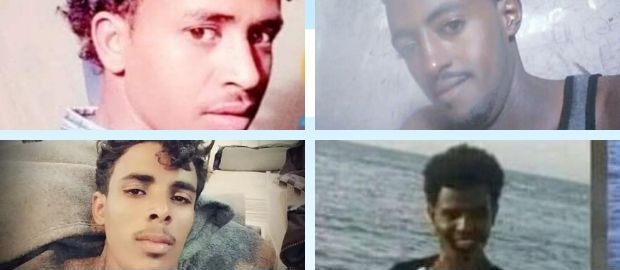
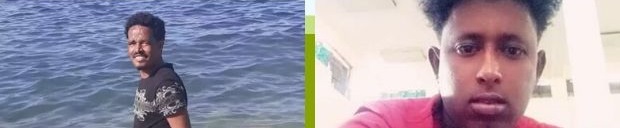
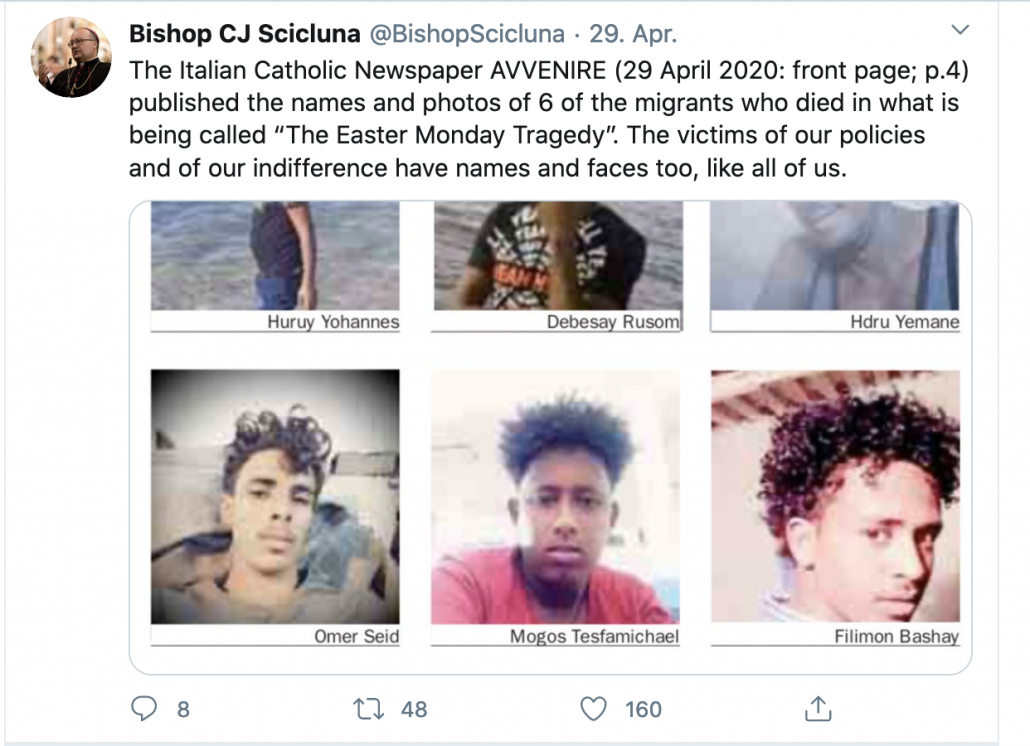
We look at the faces of Filimon, Hdru, Omar, Debesay, Huruy and Mogos. The faces of young men between the ages of 18 and 25. They had their whole future ahead of them. They wanted to study and get jobs, start families, live in peace and safety. But they are dead. Drowned, starved and parched, having fled death, torture, war and violence.

Their deaths were viewed as collateral damage, if not mercilessly included in the plan itself. The people in charge simply did not and do not care, that these young men died. This is an assumption, it is polemic, but the facts speak for it.

What we know:

At the beginning of April (the ALAN KURDI is on a rescue mission), 63 refugees in a rubber boat set out on the dangerous route across the Mediterranean (see also “Starved, parched and drowned in a European search and rescue zone“). After a long odyssey they reach the Maltese search and rescue zone. Malta is obligated to save the refugees. It is applicable law: maritime law and human rights. These established rights cannot be overridden due to the pandemic. European judges have determined this.

However, Malta hired a dubious businessman to send an inconspicuous fishing boat to bring the refugees back to Libya. This campaign killed twelve people, including the young men shown here with photos and names.

Where do the photos come from?

Avvenire.it first published the names and photos of the refugees. The portal is an official website of the Vatican news agency and is known for dealing directly with the topic of migration. The journalists have good contacts to Libya and thus also to the survivors of the push-back. As a result, the photos were probably leaked to them.

The research was also confirmed by the “Times of Malta”, where these photos were also published. Both sources are considered trustworthy and reputable. We rely on these two sources for the publication, there is no 100% certainty.

Why do we show the photos?

Because the dead have a face and a name. They aren’t just numbers and statistics.

“There is a tendency in society that has pushed the whole discussion about flight and people fleeing extremely to the right. The culture of conversation about it has been dehumanizing. That too is violent. And if we show these pictures – the pictures of real people, of personal fates, the stories behind them – then we bring this discourse back to a humane level. I believe that this dehumanized image needs to be corrected and therefore it is right to show the images,” said Gorden Isler, Sea-Eye’s chairman.

Isler draws parallels to the publication of Alan Kurdi’s picture. Even back then it was important to publish this picture because it changed public discourse.

The Bishop of Malta, Charles Scicluna, believes that the publication of the pictures does not cross any moral boundaries.

“The victims of our politics and our indifference have names and faces like all of us,” said the bishop on Twitter.

A political scandal

Maltese government official Neville Gafá swore under oath that he had organized the push-back and another Easter campaign under the direction of the Prime Minister’s office.

“I confirm that I was involved in a mission during Easter night and the following days, in which a boat with 51 irregular migrants, including eight women and three minors, was brought to the port of Tripoli. There were five bodies on the same boat,” said Gafá. (Sources: Times of Malta, repubblika.org)

He testified that he had acted on the instructions of the Prime Minister’s office. The latter had asked him to coordinate directly with the Libyan Ministry of the Interior and the Libyan Coast Guard. In addition, there is suspicion that there have been several illegal push-backs. In the meantime, criminal charges have been filed and there is said to be an official investigation.

(by Martin Geiger)

Doctor aboard the ALAN KURDI

Interview with Caterina, board doctor on the ALAN KURDI

Sea rescue in the time of the pandemic. After the dramatic events on the ALAN KURDI, it now lies at anchor in the bay of Palermo. 14 days of obligatory break. Also on board is Caterina, a doctor from Berlin. We spoke with her.

Let us start with a seemingly trivial question, but which does carry special significance in times of the pandemic. How are you?

(laughs) Yes, that is difficult. I’m alright, even though we still have to stay another week aboard the ALAN KURDI. The mission was exhausting but went well in the end. I can’t say I am feeling super good, but everyone on board is nice. That is worth a lot.

After last week’s dramatic events, you are now condemned to inactivity. How does one deal with this?

It is a really strange situation for me. After the refugees – our guests – were transferred, I was thinking at first that it had not even happened. We were done, completely worn out. We had barely slept while our guests were on board, and so at first, we were just tired (Editor’s note: the crew picked up 150 refugees on April 6 and handed them to the Italian Red Cross on April 17). Much of it I cannot really grasp yet or deal with psychologically. To truly process this, we have to leave the ALAN KURDI first (During the stay, there were two suicide attempts among the guests).

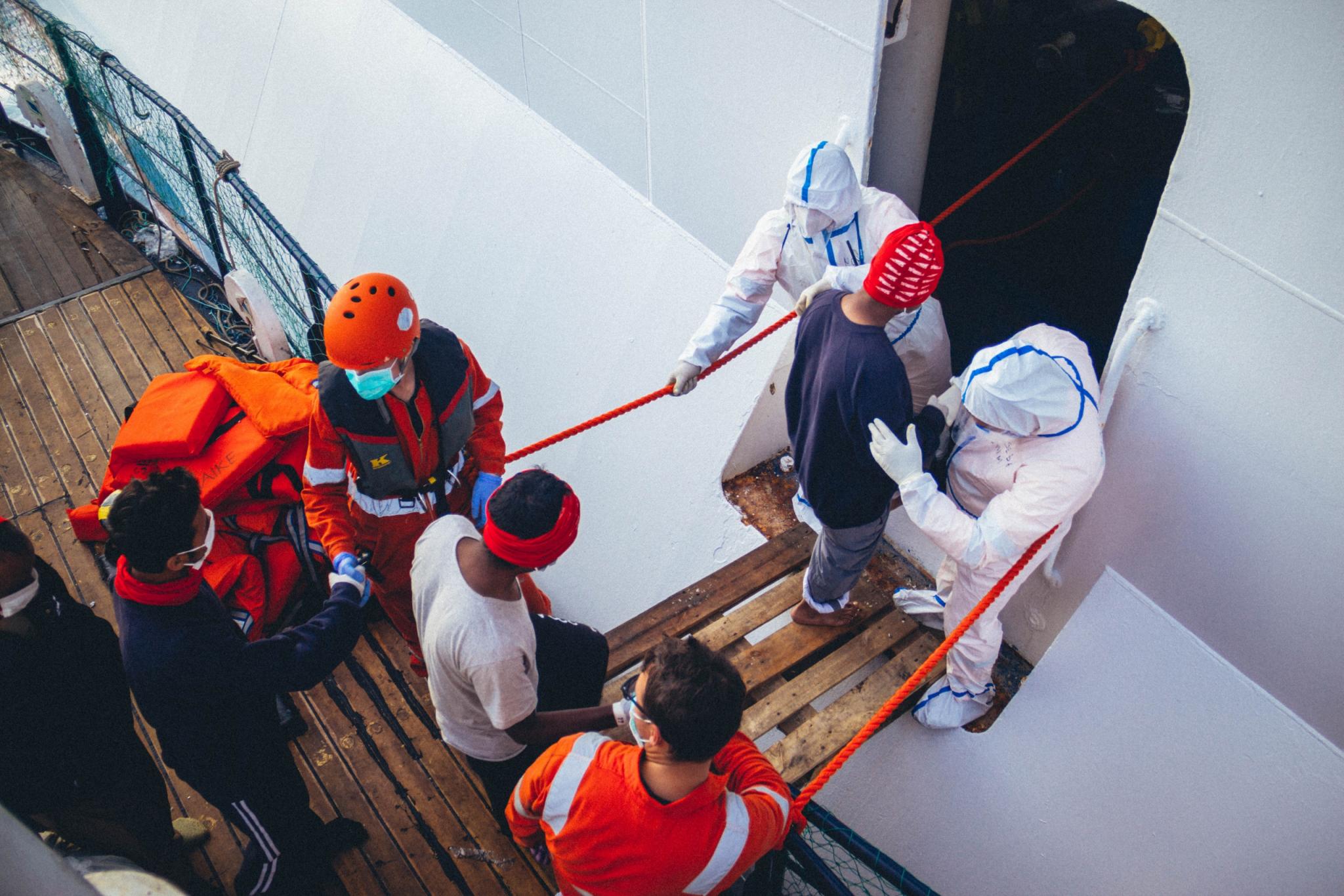
Disembarkation
The refugees are handed over to the Italian Red Cross

How is the mood on board and what do you do all day?

We keep busy with smaller tasks, tidy up the ship, take stock of everything. Small repairs like paint jobs are due. Everything we can do at sea. The mood is good.

Now you are in quarantine for 14 days on the ship, and once you get onto land, the next one comes. Do you have understanding for this?

I believe we do not have to be quarantined again in Italy, but when I return to Berlin, then yes. Of course, I am not alone during the trip, and there is risk of infection. Insofar I do understand. Even though I am not really looking forward to another quarantine in Berlin. My apartment in Berlin Mitte has no balcony, and when you look outside, you only see another building. I could imagine nicer circumstances, but that’s just how it is now.

All the refugees were tested negative for coronavirus. Does this reassure you?

Yes, that is pretty good news. The guests aboard the AITA MARI too, (Editor’s note: this ship of a Spanish NGO rescued 43 refugees from the Mediterranean, who were transferred to the Italian ferry as well) were tested negative for the virus. Yes, that is good news.

What would you have done in the case of a COVID-19 outbreak?

There had been a guideline from Sea-Eye in advance for what was to be done in case of an infection with the coronavirus. We would have isolated the patients, and these would have been cared for exclusively by me and the paramedic. Thus, we would have tried to stop the spread. While hoping, of course, that no complications would arise that we could not have treated on board.

Disembarkation
Farewell to the refugees

Sea rescue in the time of the pandemic. Is that a responsible thing to do?

Yes, this question has been posed to me often already. People who flee war and misery want to leave their country. Many of them have already been on the move for years, in the absence of human rights. They flee from torture, hunger and destitution. They want to live in safety. Even a pandemic won’t stop them. You know, I am Italian by birth. The situation in my home country is extremely tense due to the Corona-crisis. Everyday, I talk to my family there, with my relatives. I do not disregard this or ignore it. But the refugees, too, have a right to a better life. We need to help these people. We cannot just let them drown.

Will you continue nonetheless?

Yes! I continue nonetheless, yes. What we did, also during this mission, is necessary. During this period, people died. They logged a distress call and because nobody helped, they drowned. We already had 150 people on board and could not help anymore. But no one else came. Something like this must not happen. Regardless of the pandemic.

Are you afraid of an infection?

No. When I end this mission, I will work in the hospital again. There, the likelihood is relatively high that I get infected. The danger to be infected with the coronavirus is greater as a doctor in a hospital or as a customer in a supermarket, than as a doctor aboard the ALAN KURDI.

What is the first thing you’ll do once back in Berlin?

Well, what I would like to do is see my friends, drink a beer together by the riverside. But all of this will not be possible this quickly. When I think about that it is spring now in Berlin, that the weather is nice, then I want to go to the open-air cinema, to all the cultural possibilities. But for all of this, we will still have to wait a while.

(Martin Geiger)

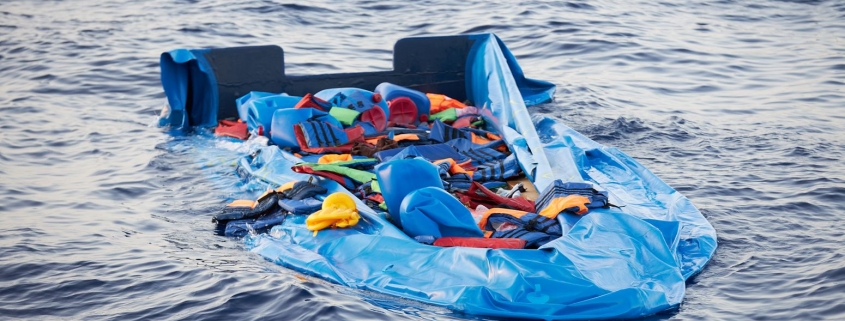
Destroyed rubber boat

Malta ignored emergency distress calls for five days and seems to have used third parties to violate international law.

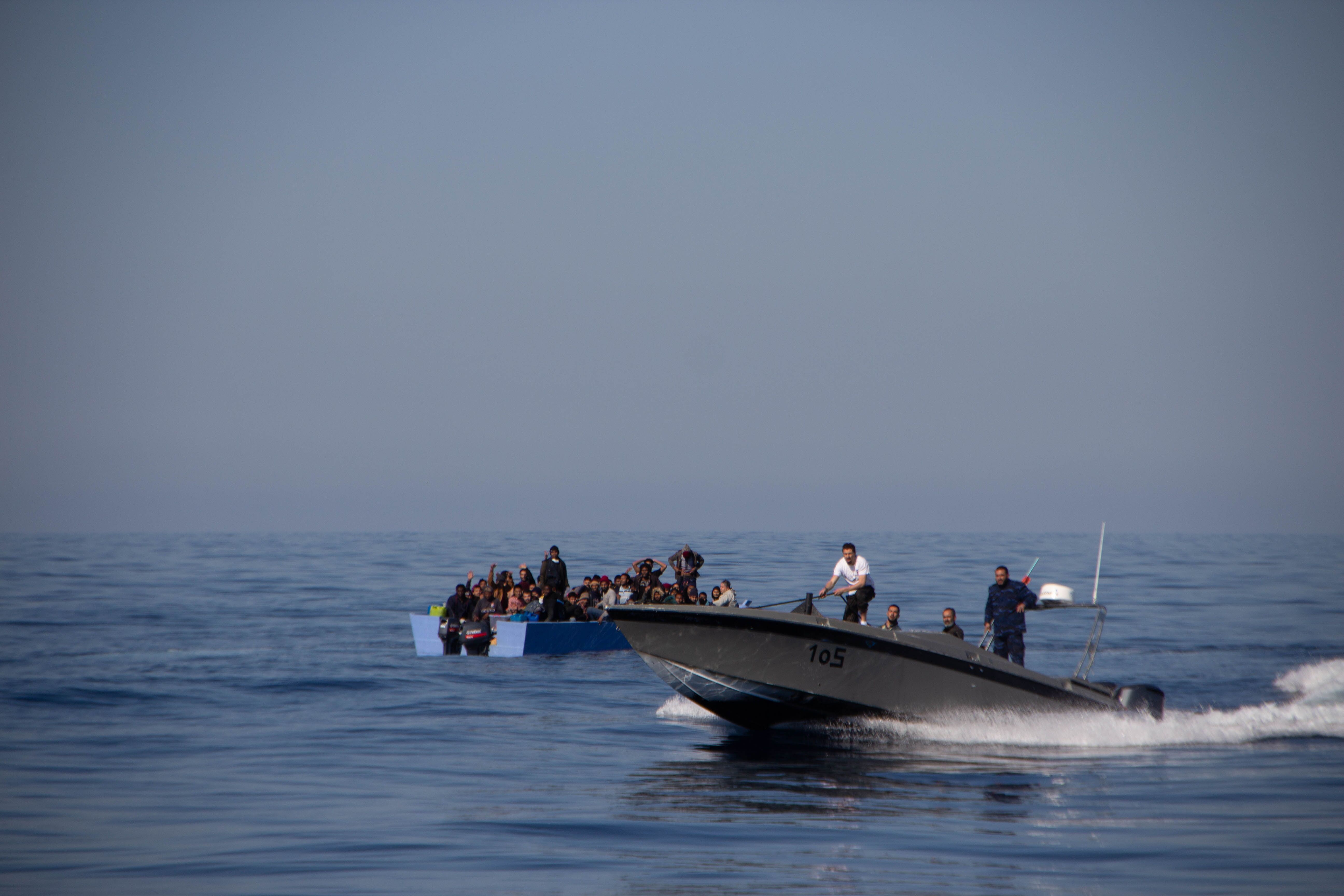
A refugee drama in the Mediterranean took place largely unnoticed by the public in early April. A fishing boat with Maltese registration took care of a boat in distress. Although the refugees were already in the Maltese search and rescue zone, they were brought back to Libya. That alone constitutes a violation of applicable international law. But there is reason to suspect that there is a system behind the procedure.

Dramatic scenes take place on the ALAN KURDI in early April. With 150 rescued, the Sea-Eye rescue ship is hopelessly overcrowded. No port allows entry. In the meantime, even the supply with food and medicine was refused. Sea rescue in times of the coronavirus. The pandemic closes Europe’s hearts and harbors.

At the same time, a rubber boat sets off from Garabulli, Libya, on April 9th. There are 63 people on board – including seven women and three children. Their goal: a port of safety. The next day, the boat is sighted in the Libyan search and rescue zone by an aircraft of the EU border-control agency Frontex.

An emergency distress call is made at night via the Alarmphone. The unseaworthy boat is taking in water, the lives of the refugees are in mortal danger. The position of the GPS data indicated that they were in international waters. Alarmphone contacted the Maltese, Italian and Libyan authorities, but no rescue mission was started.

In the morning of April 11, those responsible in Libya are finally reached. But because of the pandemic, no rescue missions are started here either. On Sunday, April 12th – Europe is celebrating the Christian Easter – the boat in distress arrived in the Maltese search and rescue zone according to GPS data. 24 hours later, both Italian and Maltese authorities launch air surveillance missions that confirm this. This information could become important in the future as it demonstrates that Malta is clearly responsible and this could be relevant for an investigation into the incident.

The Portuguese merchant ship IVAN, which is in the vicinity of the boat in distress, is instructed to wait on site and only intervene in an emergency.

Then events roll over. At the sight of the large ship, refugees jump off board and try to swim to reach the ship. Completely exhausted, three of them drown in the sea. The desperate are holding a baby in the air to show the surveillance aircraft how great their distress and despair are.

Just before sunrise help arrives in the form of a fishing boat. The MAE YEMANJA takes over the survivors, the IVAN is ordered to move away. Since Malta has closed its ports, the captain brings the refugees back to Libya. So far, so easy. But it is not.

The truth seems a lot more terrible. The MAE YEMANJA, which reaches the port of Tripoli on April 15 – six days after it left – with 56 people on board, is probably not merely a harmless fishing boat.

Five people were killed. Starved and parched to death. Seven people are still missing today. They all probably drowned.

According to Maltese blogger and investigative journalist Manuel Delia, the MAE YEMANJA left Malta’s large port on April 14 without a clear destination. After it had sailed off, the crew switched off the radar and only switched it on again the following day in Libya.

The fishing boat is registered in Malta, and the owner is Carmelo Grech, a well-known Maltese businessman with a dubious past. In a smuggling trial he was recently acquitted of all charges, despite incriminating evidence. In 2015, he was seized with 300,000 euros in cash in Libya, which led to a detailed investigation, which, however, miraculously fizzled out. Maltese investigative journalist Daphne Capuana Galizia, who was murdered by a car bomb on October 16, 2017, also researched Grech’s wide-ranging business interests.

Officially, it is said that Grech recently sold the MAE YEMANJA to a Libyan company. A corporation however, that can again be traced back to the Maltese entrepreneur. It is also claimed that the MAE YEMANJA was only dispatched to provide the refugees with water and food.

Unofficially, suspicion arises that Malta is sending small, private ships to bring refugees back to Libya so as to get rid of a problem – all against applicable law. Such dubious missions take people back to detention camps where ill-treatment, rape and torture are daily occurences.

It is still unclear whether the MAE YEMANJA ship owner has been paid by the state for his dubious rescue.

“It should send cold shivers down our spines in Germany when the Maltese Prime Minister Robert Abela comments on the death of up to 12 people with his ‘clear conscience’ and says that he acted in accordance with ‘national interest’,” says Gorden Isler, Chairman of Sea-Eye e. V.

“If the death of these people was in Malta’s interest, then we are no longer just talking about failure to render assistance resulting in loss of life. We find it worrying and disturbing that there is no criticism from Germany regarding Malta’s actions, ”continues Isler.

Criminal charges have been pressed against the Maltese government and Prime Minister Robert Abela. The judiciary has launched an investigation against him and army chief Jeffrey Curmi. In addition to this incident, there is also the allegation that the crew of a patrol boat destroyed the engine of a refugee boat and left the people to their fate.

(Martin Geiger)

Sources: Times of Malta, alarmphone.org, avvenire.it
Symbolic photo: Fabian Heinz / Sea-Eye (June 2019)

Red Cross evacuates 146 rescued people to Italian quarantine ship

  • Unprecedented solidarity for ALAN KURDI’s mission
  • German Federal Ministry of the Interior appealed to NGOs to stop rescue operations
  • ALAN KURDI crew to spend 14 days in quarantine

After an almost two-week blockade, the odyssey of the German rescue ship ALAN KURDI ended on Friday, close to the port of Palermo. Already on Easter Sunday, the Italian Minister of Transport Paola De Micheli and the head of Civil Protection Angelo Borelli proposed to transfer the rescued people on board the German rescue ship onto a larger, more suitable ship , where they could be quarantined and also receive proper care in a safe environment. Finally, on Thursday evening, the Italian and German authorities confirmed the proposition’s concrete implementation for Friday morning.

“The situation on the ALAN KURDI has been unbearable for days. We are infinitely relieved that this blockade is finally over,” said Jan Ribbeck, Head of Operations for Sea-Eye.

Red Cross evacuates 146 rescued people to Italian quarantine ship

Under the coordination of the Italian Red Cross, the evacuation of 146 rescued people onto the Italian passenger ship RAFFAELE RUBATTINO began on Friday afternoon. Several ships of the Italian coast guard, including the DICIOTTI, were involved in the transfer of people to the RAFFAELE RUBATTINO.

Disembarkation

On the Italian ferry, people are now to be quarantined for another 14 days. So far, it is still unclear how it will go on for the people afterwards. Italy has temporarily closed its ports for the disembarkation of people rescued from distress at sea, due to the general health emergency. To date, the authorities have not published any plans about a port of disembarkation and the distribution of refugees.

“It is now very important to think about the rescued people on the Spanish ship AITA MARI. About 40 people are still waiting for a humanitarian solution on this ship as well,” said Gorden Isler, Chairman of Sea-Eye.

Unprecedented solidarity for ALAN KURDI’s mission

During the blockade, Sea-Eye and the ALAN KURDI experienced unprecedented solidarity, particularly in Italy. After a letter from Luca Casarini, the Italian sea rescuer, to Pope Francis, the head of the Catholic church, replied and unequivocally stood behind all civilian sea rescuers. However, the commitment of the Mayor of Palermo deserves special mention. Leoluca Orlando was in frequent contact with Head of Operations Jan Ribbeck and asked about the people on the ALAN KURDI every day.

“It can be said that Leoluca Orlando was an important advocate for the human rights of the rescued people and also our crew on the ALAN KURDI. His commitment was essential for the end of this blockade,” said Sea-Eye’s Head of Operations Jan Ribbeck.

But the sea rescuers from Mediterranea and Sea-Watch-Italy also appealed to the government in Rome. They campaigned for civil sea rescue operations to continue and for the ships ALAN KURDI and AITA MARI to be assigned ports of safety. Such a solution is still not in sight for the AITA MARI.

Federal Interior Ministry appealed to NGOs to stop rescue operations

During the rescue 11 days ago, a letter from the German Federal Ministry of the Interior had reached operations management. It called on German civil sea rescue organizations to cease operations and, if necessary, to recall all ships because of the lack of ports of disembarkation in the central Mediterranean. At this point, the ALAN KURDI had already successfully saved 150 lives.

“You cannot ask us to stop saving lives, while simultaneously, the same politicians in Germany are demanding that everything humanly possible be done to save as many lives as possible,” said Gorden Isler, Chairman of Sea-Eye.

ALAN KURDI crew to spend 14 days in quarantine at anchor

The ALAN KURDI crew is now also facing a 14-day quarantine. The ship shall be anchored off Palermo. The next planned Sea-Eye rescue mission falls victim to these circumstances. However, the corona crisis did not only lead to operational problems. Like many NGOs, Sea-Eye recorded a substantial decrease in donations.

“We want to do everything we can to start a rescue operation in May. Letting people drown because of the Corona crisis is just as bad a reason as any other reason that has been claimed in this debate,” said Gorden Isler, chairman of Sea-Eye.

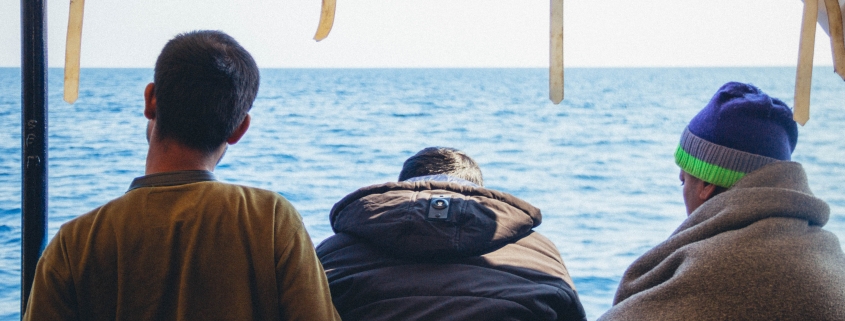
Rescued person on the ALAN KURDI

Despair and hopelessness among the rescued people increase dramatically

  • Attempted suicide aboard the ALAN KURDI
  • Captain asks the Italian coast guard to evacuate several people
  • Difficult medical evacuation at night
  • Blockade continues despite Italy’s proposed solution

In the early morning hours of Wednesday, a 24-year-old man attempted suicide aboard the ALAN KURDI. In her medical report, the ship’s doctor took note of severe state of anxiety, experiences of violence in a Libyan prison and a conflict-ridden relationship with other rescued people on board. The man’s despair had become so unbearable that he saw no other way out for himself than to escape the situation by suicide.

“The patient is a danger to himself and others. We are certain that the condition will deteriorate further,” said the ship’s doctor Dr. Caterina Ciufegni in her medical report to the Italian coast guard.

The despair and hopelessness of some people has reached an unprecedented level. Another young man is so stressed, that he has been resorting to self-injuring more and more for days. Captain Bärbel Beuse asked for the evacuation of three people on Wednesday afternoon. The Italian Coast Guard’s response was prompt. An officer of the MRCC ROM informed the captain via radio of the coordinates for a meeting point with a coast guard ship.

“We are happy and grateful that Rome assessed the danger for the people who had been saved and us, as well and immediately sent a ship,” said Captain Bärbel Beuse.

The evacuation was very difficult. The three boats of the Italian coast guard could hardly get closer without causing dramatic scenes on the ALAN KURDI.

“The people are totally desperate and have been held on the ALAN KURDI for 10 days. They indicated they wanted to jump into the water to reach the Italian boats. They almost couldn’t be calmed down,” said Jan Ribbeck, manager of operations at Sea-Eye.

The Italian coast guard apparently expected such difficulties because it sent several boats for three people to be evacuated. The coast guard seem to be completely aware of the difficult situation on the ALAN KURDI. After two hours, the evacuation of three people was finally completed.

A solution proposed by the Italian Minister of Transport has been on the table since Sunday. The people on the ALAN KURDI are to be evacuated to a larger ship in order to be more properly cared for and put in quarantine. Three more days have passed since then. No concrete information about the place and time of the evacuation was received to date, from neither Rome nor Berlin.

“The Italian authorities are still preparing a ship onto which the 149 people can be transferred,” said the Federal Foreign Office on Wednesday evening to the Sea-Eye operations management.

However, no information could be given about the exact time.

The ports of Italy, Malta and Libya are closed. 146 people on the ALAN KURDI and 43 people on the Spanish rescue ship AITA MARI continue to be denied a port of safety. No maritime rescue coordination center took responsibility for several distress emergencies on Easter weekend. Instead of looking for 85 missing people, Malta and Italy simply denied their existence.

“The relentless treatment of refugees currently seems to be political consensus at all EU borders. Letting people drown in the Mediterranean is not a new phenomenon and can therefore not be justified with Corona alone. “The increased brutality against refugees and the new ruthlessness against rescue organizations can only be explained by assuming that it shall act as a deterrent. Solidarity among the EU member states towards Italy and Malta is long overdue,” said Gorden Isler, Chairman of Sea-Eye e. V.

ALAN KURDI

Nobody feels responsible for rescuing people

  • The situation on the ALAN KURDI remains tense
  • Our on-board doctor documents clear signs of torture
  • A proposed solution for the ALAN KURDI is currently being discussed

Dramatic scenes took place on Easter Sunday in the central Mediterranean. While the ALAN KURDI remains blocked off the coast of Sicily, cases of distress at sea increased over the Easter weekend, while nobody took responsibility. Malta did not initiate any rescue operations, even for emergencies that were clearly reported in the Maltese search and rescue zone. The so-called Libyan coast guard has also stopped all rescue efforts, citing a lack of protective masks available as the reason, as Spiegel Online reported. It is feared that dozens of people have already drowned this Easter weekend, and more people still in distress.

Meanwhile, 149 rescued people had to spend their eighth night on the ALAN KURDI. People have to sleep on deck in a confined space and share two toilets and a shower. In conversation with our human rights observer, some of the rescued people reported being tortured in Libya. Our on-board doctor documented scars and burns. One person’s fingers were broken.

The Italian Minister of Transport and the head of Civil Protection made the proposal to transfer the refugees to a larger Italian ship in order to carry out a quarantine. The German Federal Foreign Office confirms that this could be a serious solution.

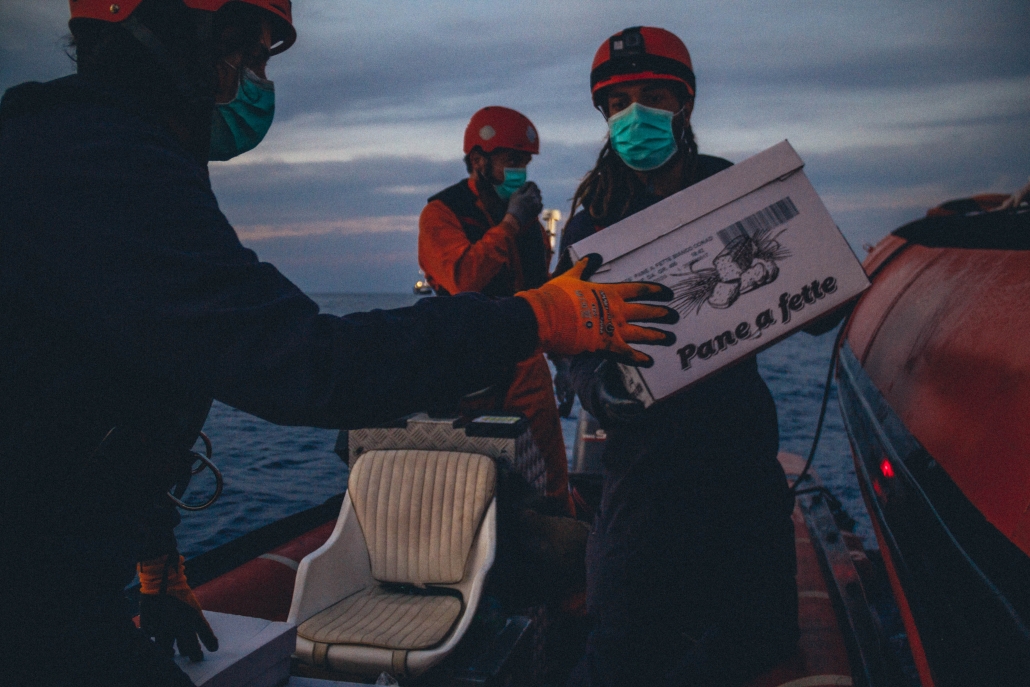
Supply of relief goods

The Italian coast guard has already supported ALAN KURDI twice with a supply of relief goods. Leoluca Orlando, the mayor of Palermo, is in close contact with our operations manager Jan Ribbeck. Orlando fights for the rescued and the crew of the ALAN KURDI.

“Everyone has the right to health,” Orlando told the Italian press.

The third rescue mission of the year was supposed start on Easter weekend. Unfortunately, the mission had to be canceled. The blockade seriously affects Sea-Eye, in addition to the Coronavirus-related severe decrease in donations. Each additional day costs around € 2,500. The days, when saving lives led to public attention and donations, are long gone. Therefore, we ask for your support.

During a dramatic rescue operation, the ALAN KURDI crew saved 68 lives last Monday. A second rescue operation with 82 people rescued followed a few hours later.

Our only request to the 27 EU member states with 447 million inhabitants was to give these 150 people security and peace.

So far, only Italy has sent aid. We received food and one person was evacuated by the Italian coast guard. Some of the rescued people show clear physical signs of torture from time spent in the civil war-torn country of Libya.

Anna, first officer of ALAN KURDI, and Josefin, part of our medical team, report from the ship.

You are currently viewing a placeholder content from YouTube. To access the actual content, click the button below. Please note that doing so will share data with third-party providers.

More Information
Video from Boxfish