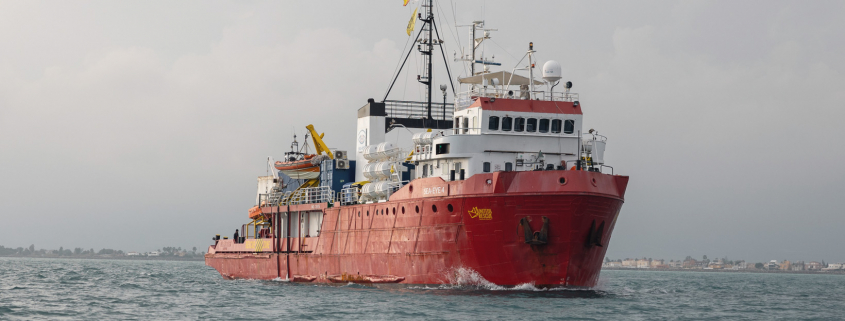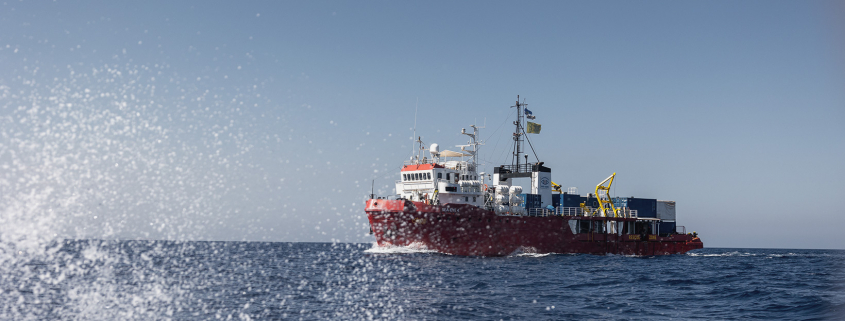
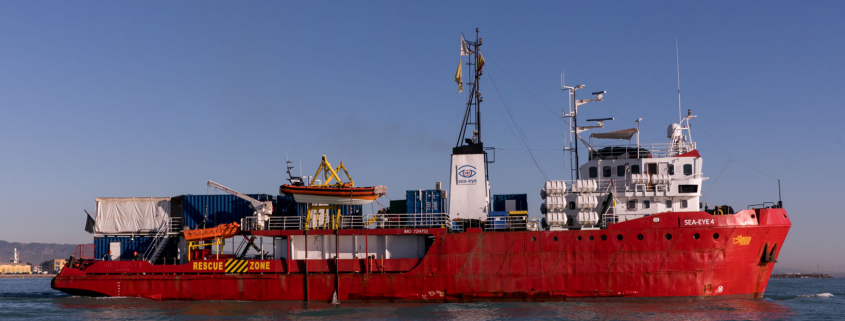
SEA-EYE 4

Italy massively interferes with the rights of the flag state Germany, European law and human rights guarantees.

With new rules of conduct at the end of the year, the Italian government wants to further complicate the work for civilian sea rescue organizations and, according to legal experts from Sea-Eye’s Legal Team, massively interferes with the rights of the flag state Germany, European law and international and regional human rights guarantees.

According to the version of the decree available to us and a preliminary assessment of its legal content, it is likely to be unlawful insofar as it seeks to regulate the conduct of German-flagged vessels in international waters and to sanction them upon entry into the Italian territorial sea. The coastal state has no authority to regulate and enforce the rescue of foreign ships beyond its territorial sea (12 nautical miles). Thus, Italy cannot dictate how rescue operations in international waters are to be conducted, as this is a matter for the flag state (in the case of Sea-Eye Germany). Even according to the International Convention on Maritime Search and Rescue, Italy as a coastal state (and only in its own Search and Rescue Zone) can only coordinate and issue instructions, the enforcement of which, according to international and German law, is then in turn the responsibility of Germany as the flag state. Moreover, neither the International Convention on Maritime Search and Rescue nor the Guidelines of the International Maritime Organization provide a basis for the rules of conduct demanded by Italy”, says Prof. Dr. Valentin Schatz, member of the Sea-Eye Legal Team.

Italy is therefore interfering with Germany’s freedom of navigation under Article 87 of the United Nations Convention on the Law of the Sea without any basis in international law by regulating the conduct of German ships in international waters and threatening them with fines and the seizure of ships. It should be noted here that Italy has already been convicted in 2019 in a case before the International Tribunal for the Law of the Sea in Hamburg (The M/V “Norstar” Case [Panama v. Italy], Judgment of 10 April 2019, paragraph 222) for a similar unjustified interference with Article 87 of the Law of the Sea Convention.

It follows from the EU Directive on common procedures for granting and withdrawing international protection that EU member states must provide information on asylum applications. This also applies at the EU border. But this duty cannot be shifted to civilian sea rescue organizations or to the crews of rescue ships. Rather, it is the duty of the EU coastal state or the EU border state concerned. Similarly, the duty to conduct asylum procedures is a coastal state obligation,” says Prof. Dr. Anuscheh Farahat, member of the Sea-Eye Legal Team.

Sea-Eye will not follow any illegal code of conduct or any other official directive that violates international law or the laws of our flag state. In our case, these are the laws of the Federal Republic of Germany. We therefore reject this so-called code of conduct and fear that this will lead to conflicts with the Italian authorities. We therefore expect the Federal Government to protect the sea rescue organizations under German flag from the illegal behavior of the Italian authorities and to support us decisively in case of conflict. Any delay in our operations endangers human lives,” says Dr. Annika Fischer, member of the board of Sea-Eye e.V.

Disembarkation in Livorno

First rescue mission in 2023 on the line due to slump in donations

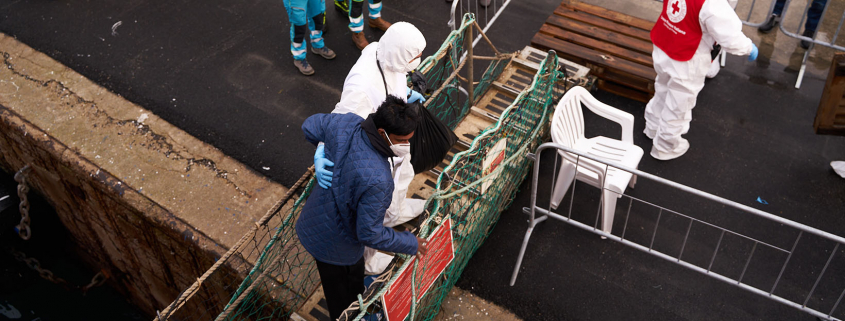
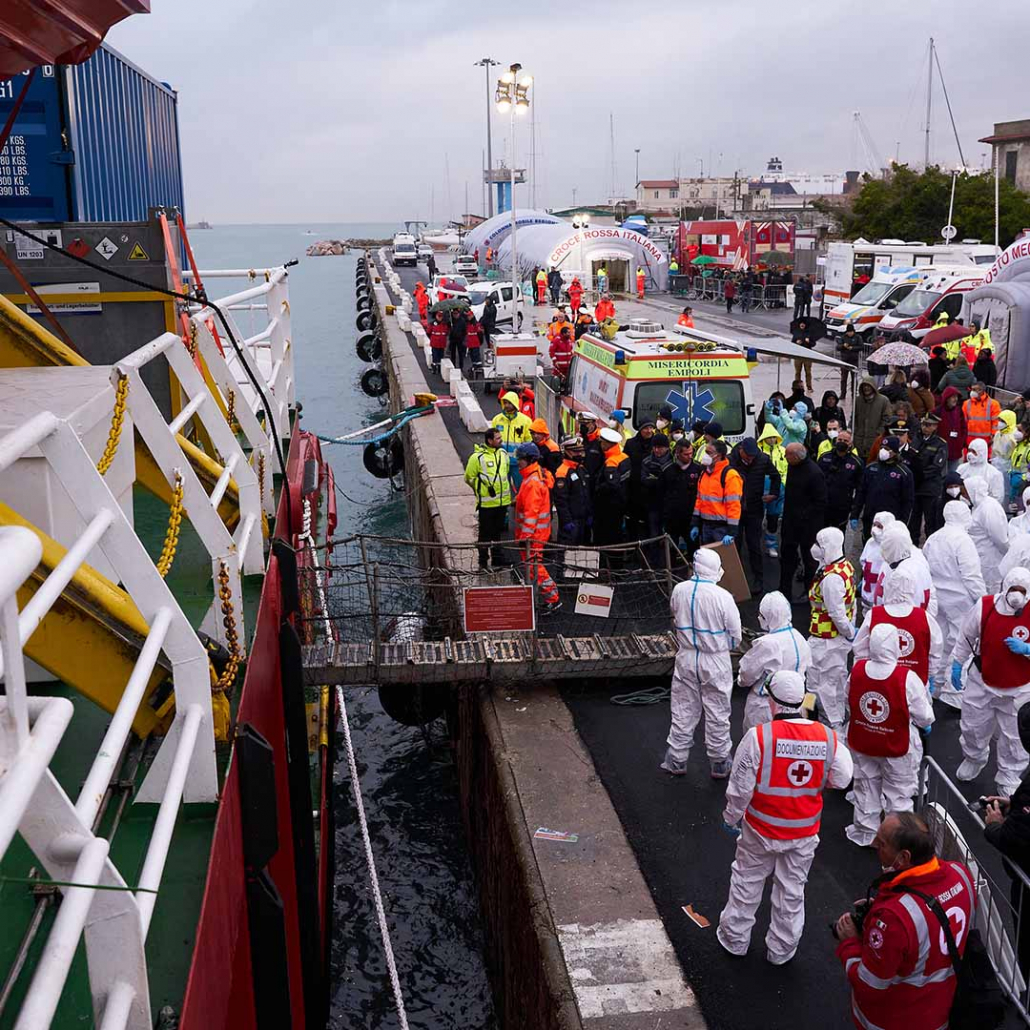
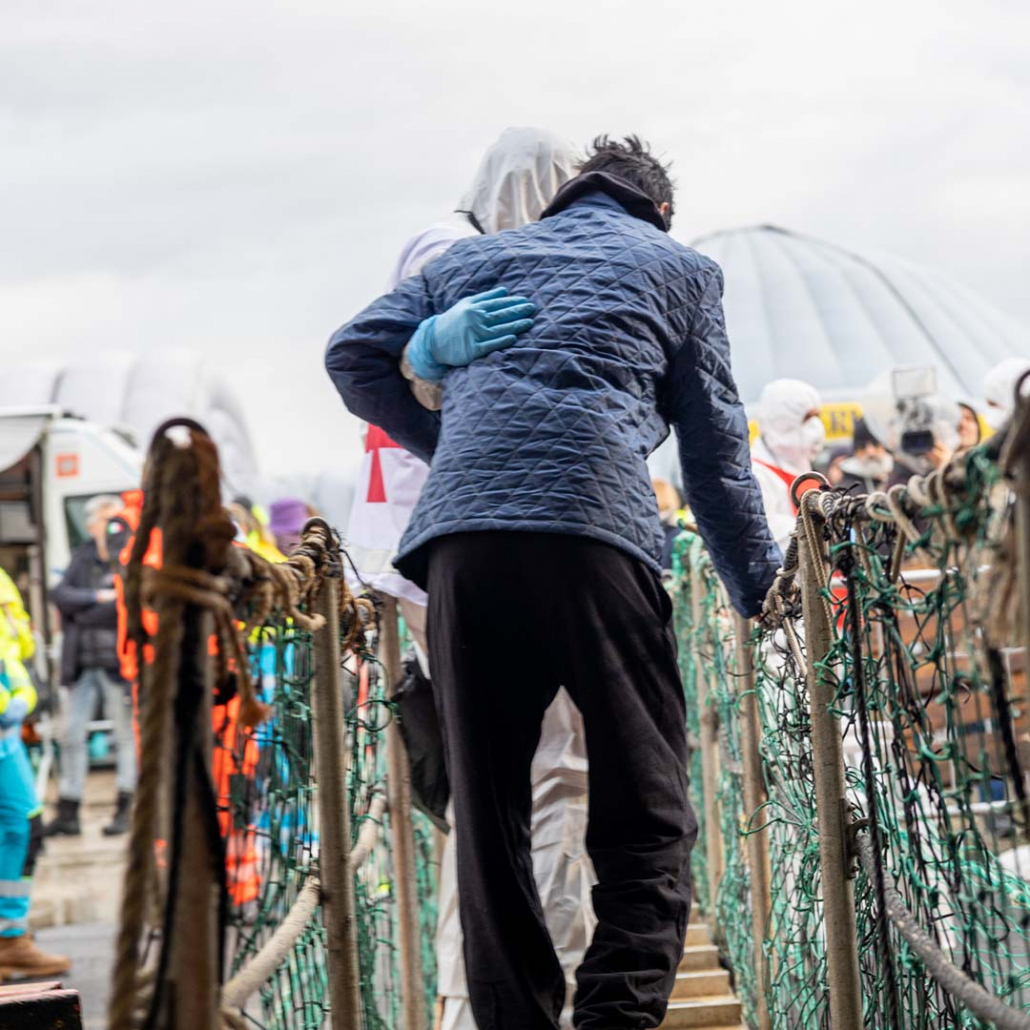
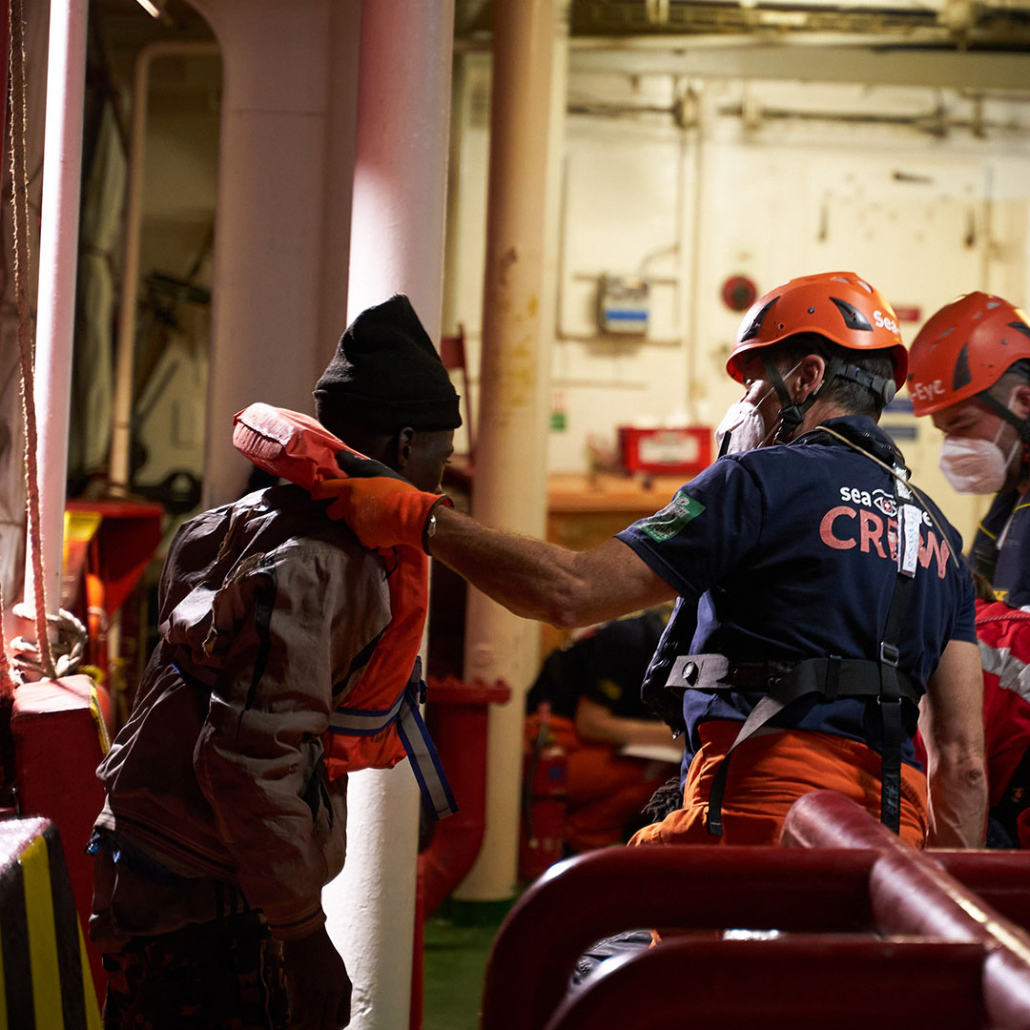
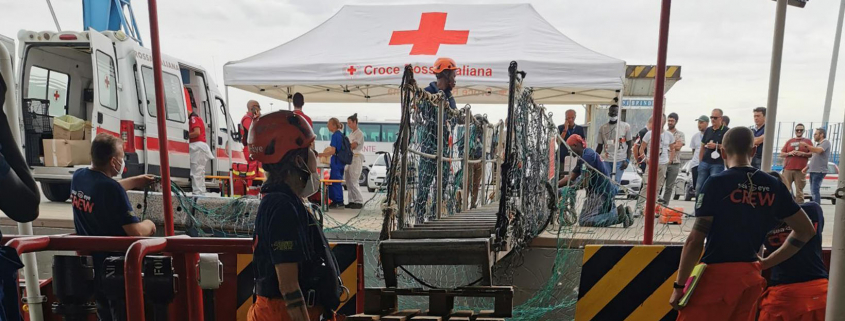
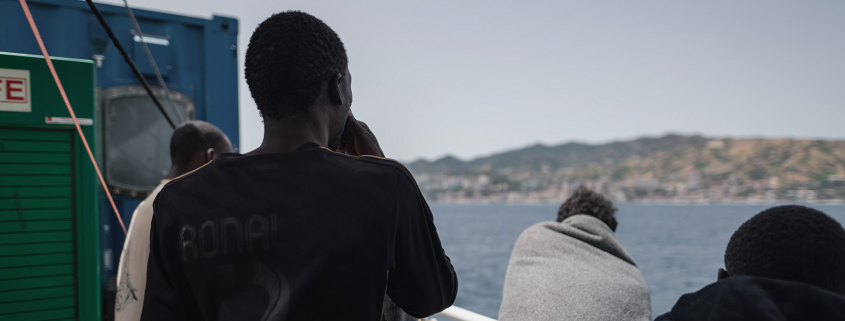
On 23.12.2022, the SEA-EYE 4 arrived at the port of Livorno with 108 rescued people on board. Three people with severe fuel burns, which they had contracted on their boat due to gasoline spills, had to be taken directly from the ship to a hospital. At noon, all people were finally able to leave the rescue ship.

During the rescue mission, the crew was able to find two distress cases and rescue all people. While the cooperation with other NGOs like Mission Lifeline as well as with merchant vessels like the MTM SOUTHPORT worked well, there was no support from the responsible rescue coordination centers. On the contrary, if it had been up to the Italian and Maltese authorities, the SEA-EYE 4 would have docked in Livorno with significantly fewer rescued people. Thus, the Maltese rescue coordination center actively tried to prevent the second rescue by requesting merchant ships to ignore the distress case under threat of consequences.

Disembarkation in Livorno

For the first time, the port allocation by Italian authorities was done proactively and while a rescue operation was still underway.

There are many indications that it is a new strategy of the Italian authorities to assign ports as quickly as possible and as far away as possible. This is an attempt to keep rescue ships out of the area of operation as quickly and for as long as possible. The strategy is changing, but the goal of the authorities remains the same: to make it more difficult to rescue people in order to reduce the number of arrivals in Europe,” said Gorden Isler, chairman of Sea-Eye e.V.

Disembarkation in Livorno

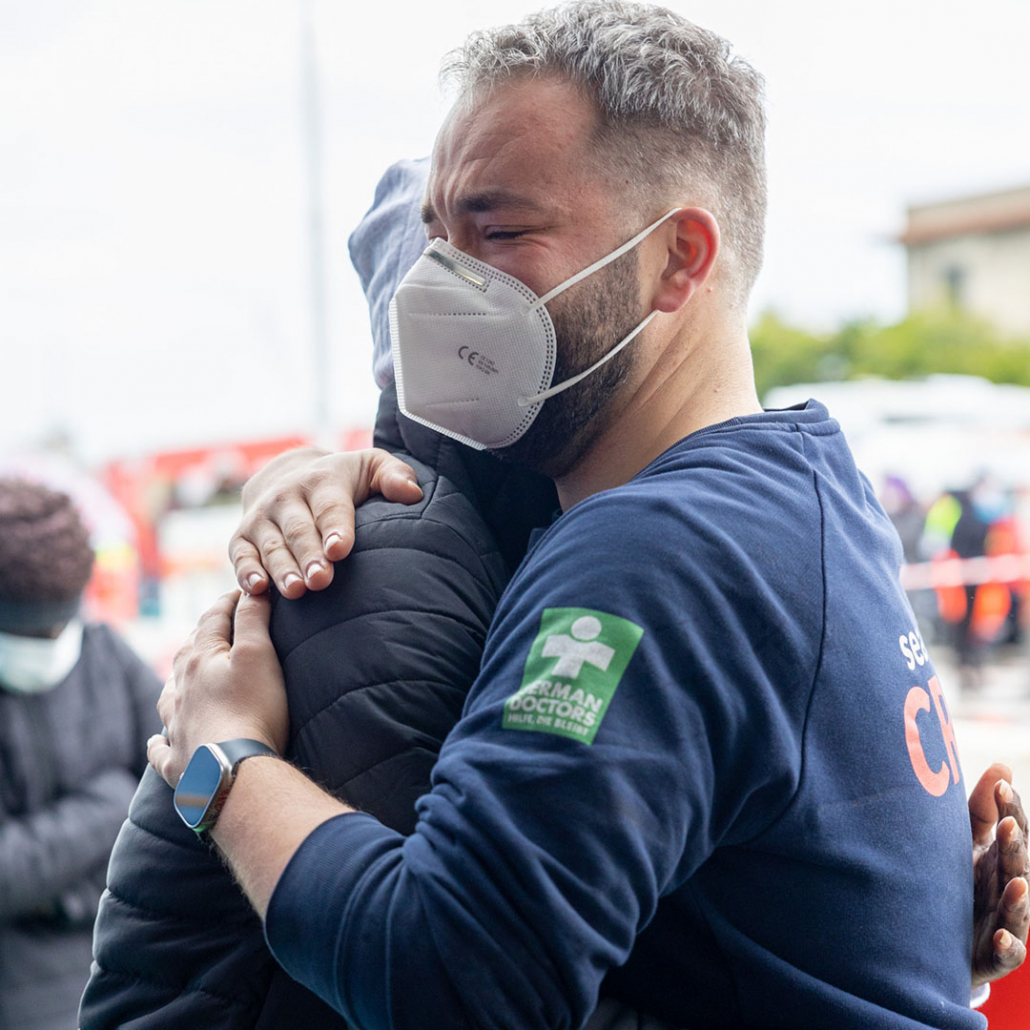
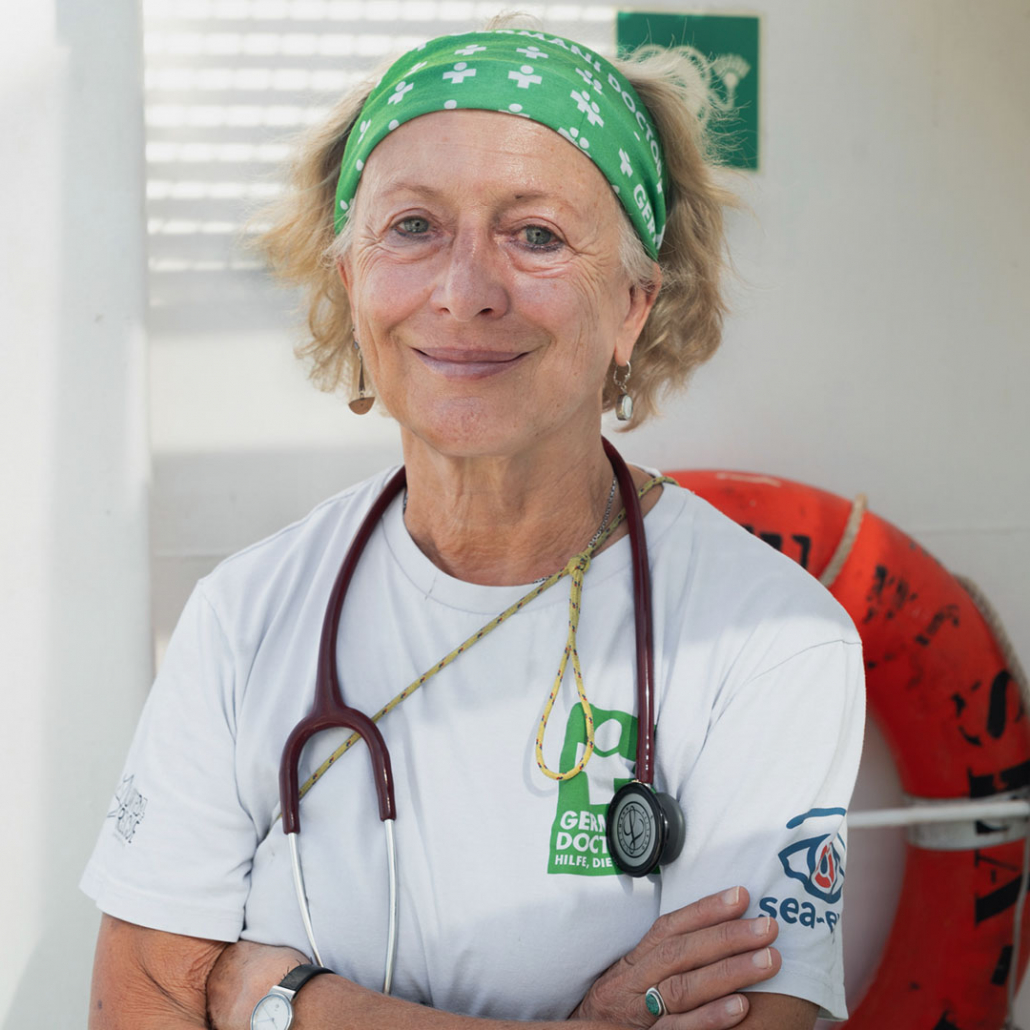
In the past few days, the medical team on board provided initial treatment to all 108 people rescued from distress at sea. 20 refugees suffered from moderate to severe burns from spilled gasoline. Three particularly severe cases had to be taken directly from the ship to hospital. I am glad that all those rescued are now on land and safe,” says Nour Hanna, mission doctor from German Doctors e.V., summing up the situation.

Disembarkation in Livorno

In January, the SEA-EYE 4 is actually supposed to set off directly on its next mission. Unfortunately, funding is on the line due to a 23 percent drop in donations compared to the same period last year. We are therefore very concerned about being able to carry out fewer missions in the coming year,” Isler said.

Rescue

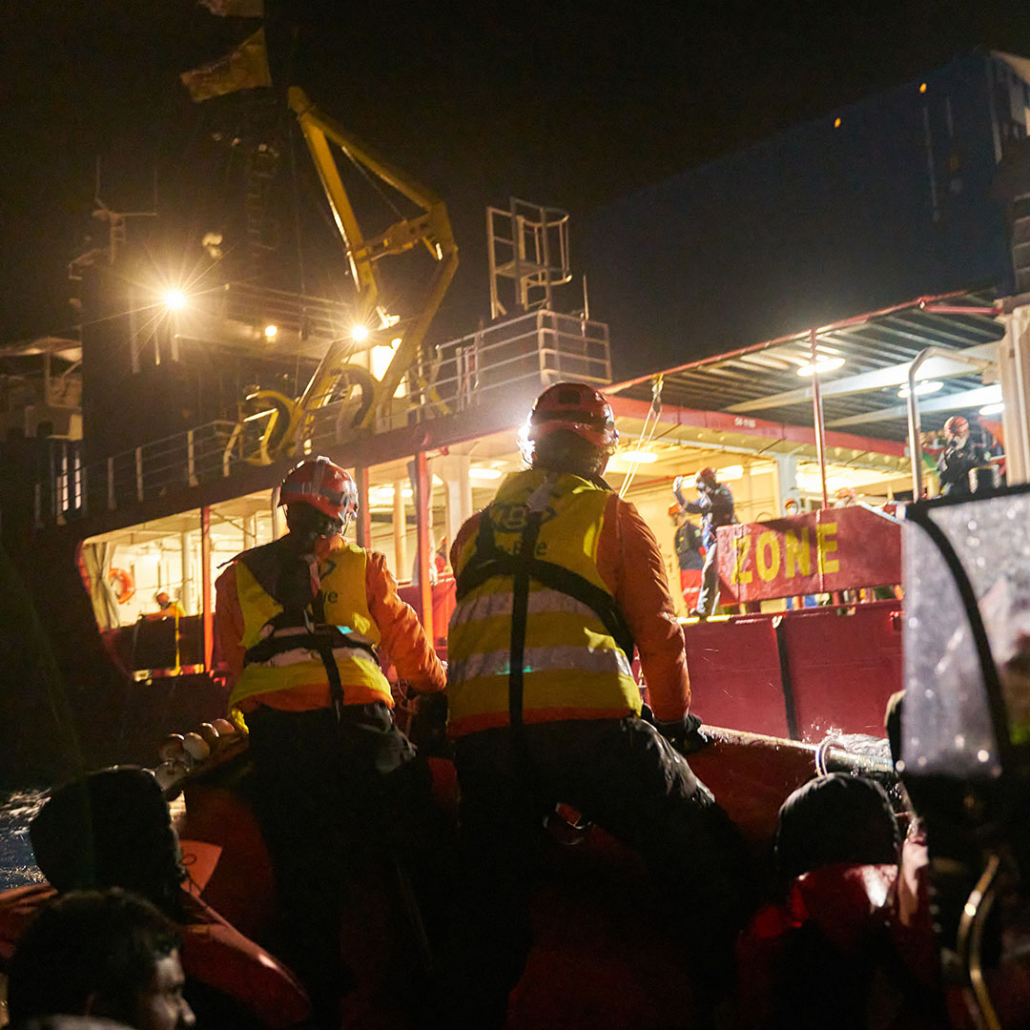
SEA-EYE 4 rescues another 45 people from distress at sea and is now on its way to Livorno with 108 people on board.

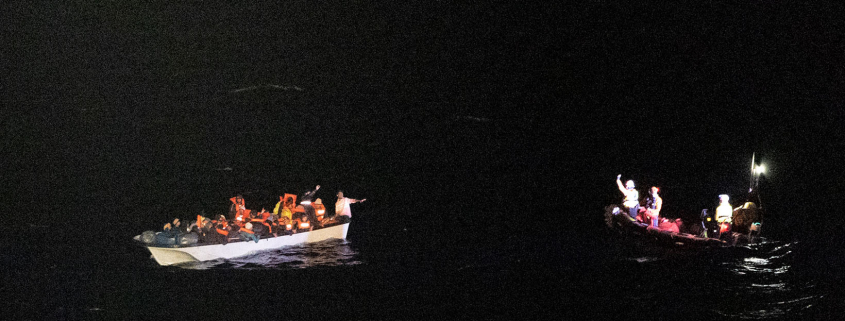
In the night from Sunday to Monday, the crew of the SEA-EYE 4 was able to rescue 45 more people from distress at sea in the Maltese search and rescue zone, after they had been fighting for survival on the high seas for six days. Previously, both Italy and Malta had actively tried to prevent the rescue of these people. For example, Malta instructed two merchant ships to ignore the case and even threatened consequences.

On Saturday afternoon (Dec. 17), when Italian authorities assigned Livorno as a port of safety to the SEA-EYE 4, with 63 rescued people on board at the time, the rescue ship was involved in the search of another distress case. 45 people had been holding out for days on a plastic boat unfit for sea. Although the Italian authorities knew about the case and the acute life-threatening situation of the people since Friday, they instructed the SEA-EYE 4 to sail immediately to Livorno.

Rescue

As there were no other rescue vessels in the immediate vicinity, the SEA-EYE 4 remained in operation and continued to search for the people missing. During the 35-hour journey, the SEA-EYE 4 was in contact with two merchant ships that were also in the Maltese search and rescue zone and assured help. However, the Maltese Rescue Coordination Centre instructed both vessels to continue on their regular course. While the NORVIKEN then called off the search, the MTM SOUTHPORT remained on the scene and continued to participate in the search.

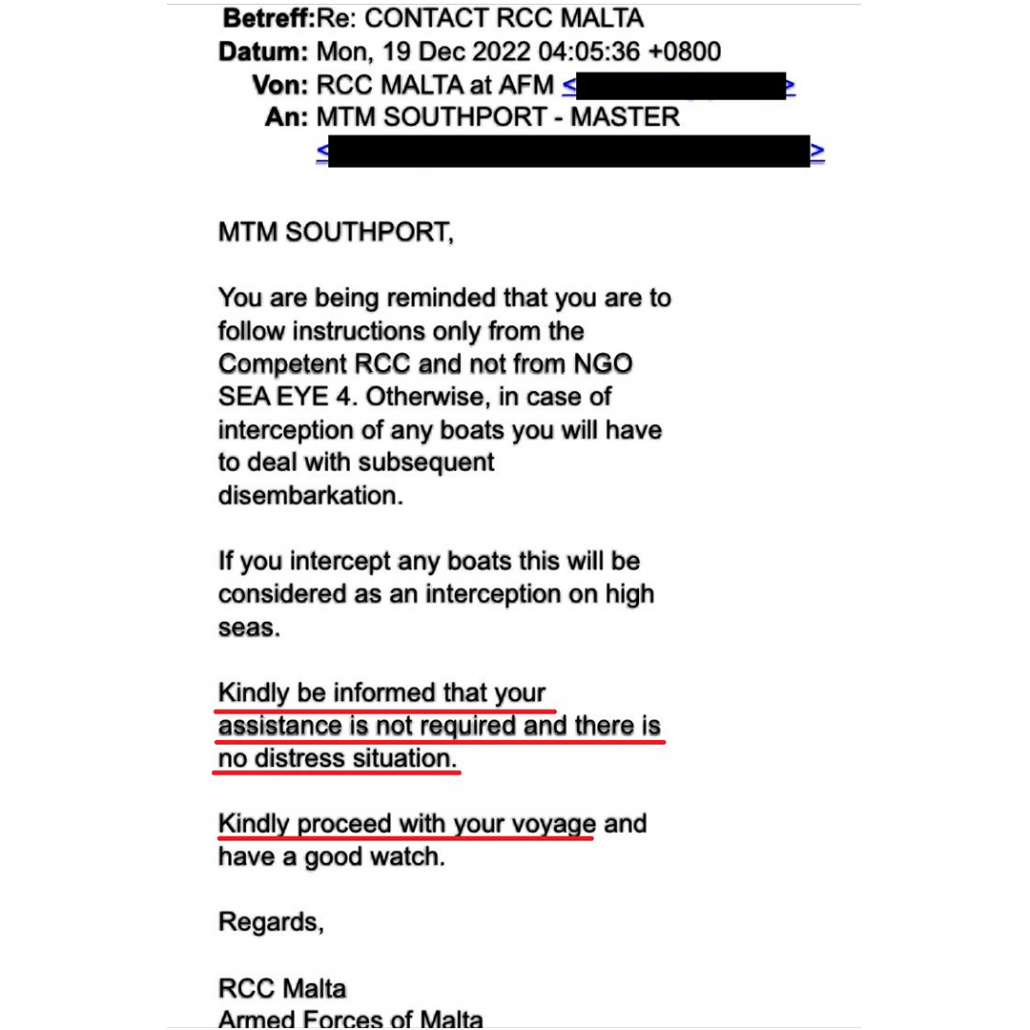
An email from the Maltese Rescue Coordination Centre to the MTM SOUTHPORT stated that there was no distress case and that a rescue of the people would be considered an interception on the high seas by the Maltese authorities. Measures to rescue or at least to review the case were not initiated by Malta at any time. Instead, the Maltese Rescue Coordination Centre actively tried to prevent the rescue. This is a systematic approach based on political calculations, which repeatedly costs human lives: The case of the young girl Loujin, who died of thirst in the Maltese search and rescue zone in September, is just one well-known example of the consequences of this deliberate inaction.

Email RCC Malta

This case relentlessly shows that the failure of Maltese authorities to provide assistance is systematic. The fact that Malta not only does not carry out its own rescues in its own search and rescue zone, but even actively tries to prevent rescues by merchant ships, is a scandal!” says Gorden Isler, Chairman of Sea-Eye e.V.

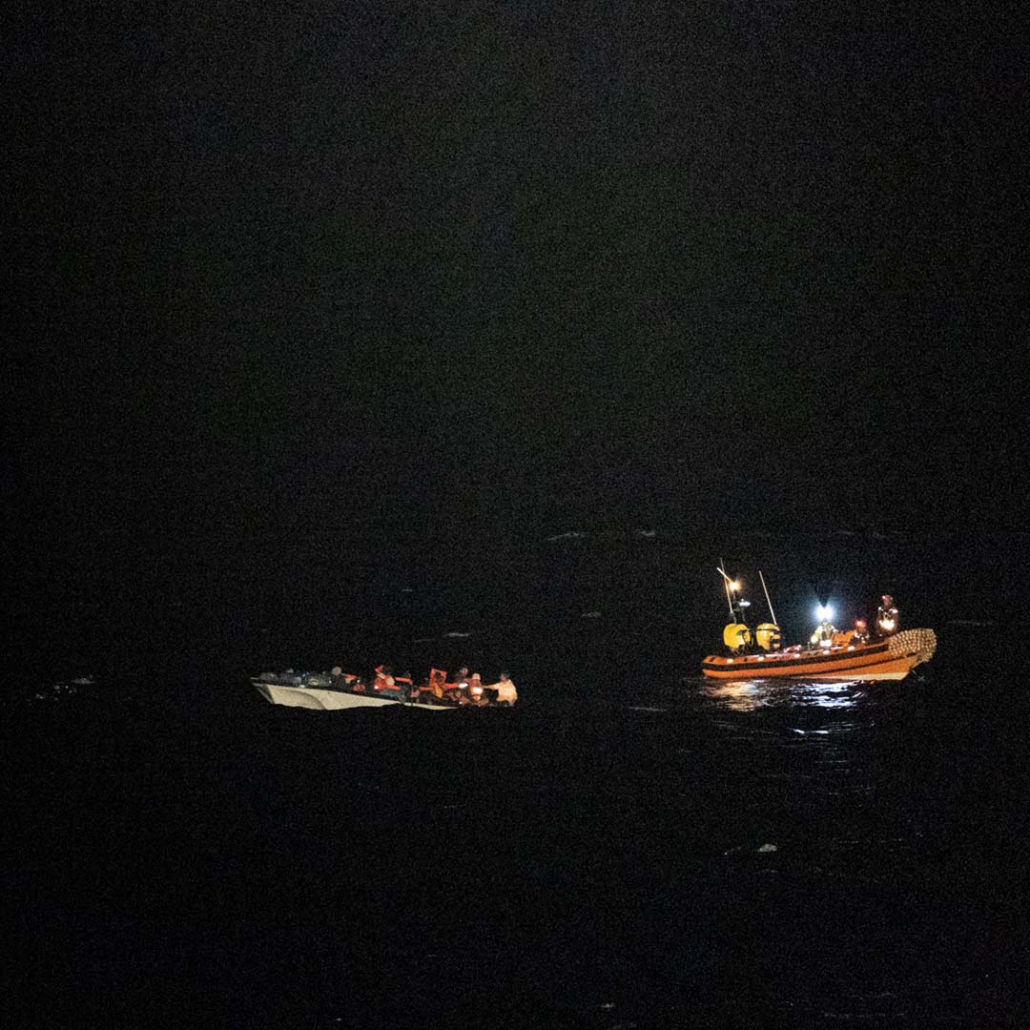
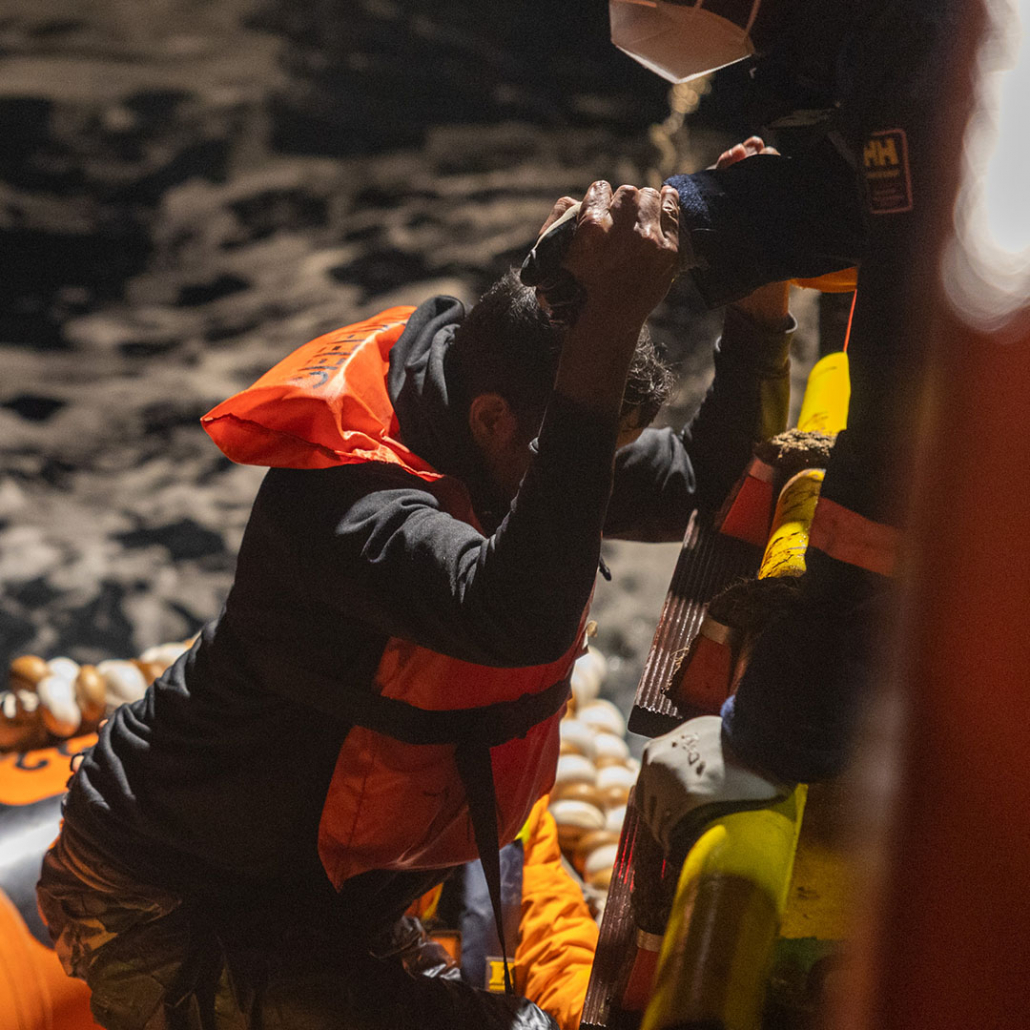
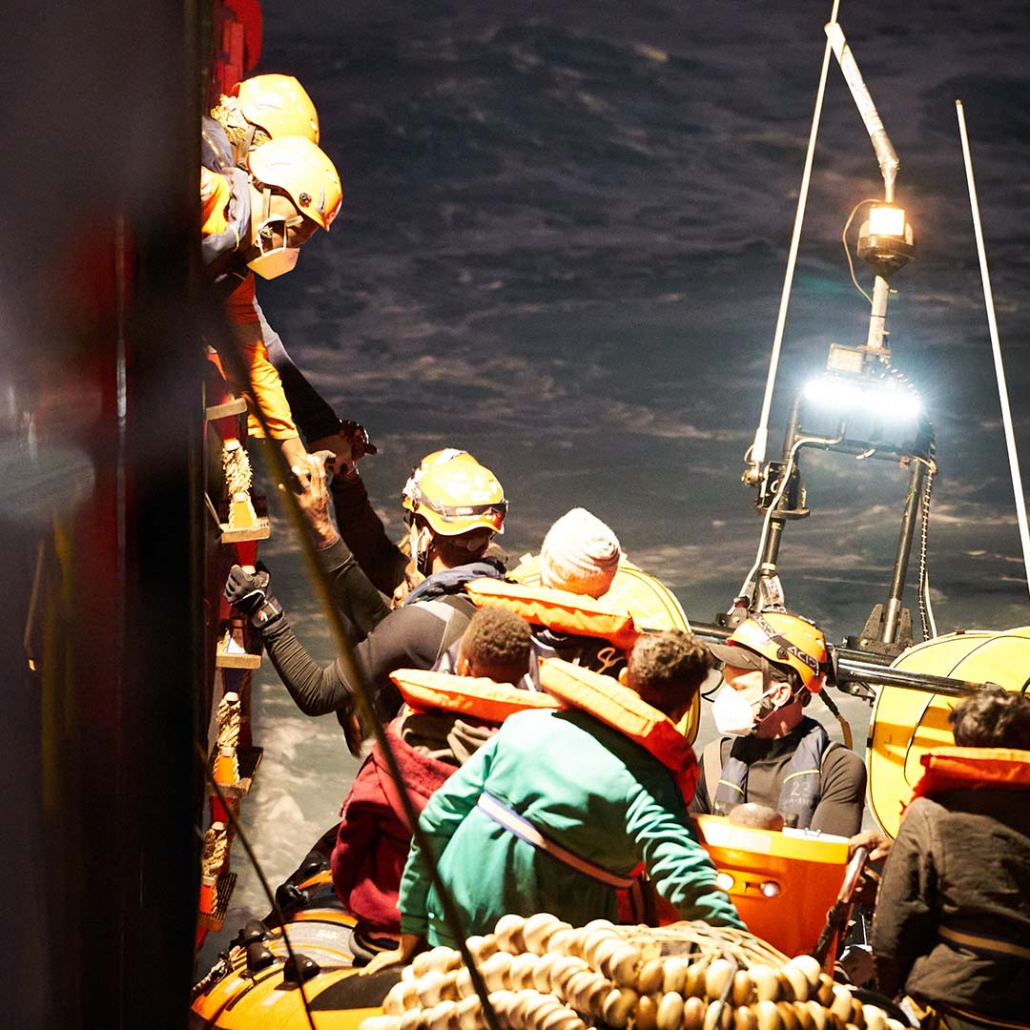
With the help of MTM SOUTHPORT, the SEA-EYE 4 was finally able to find the 45 people, rescue them and evacuate them to the SEA-EYE 4. The hardships left clear traces. Nearly all of the people suffered burns from spilled gasoline and are traumatized by the events. In total, the people were out at sea for six days and had to fear for their lives. The SEA-EYE 4 is now on its way to Livorno to bring all 108 people safely ashore. The authorities were informed at all times about the status of the rescue and the actions of the SEA-EYE 4.

Rescue

The crew is exhausted but happy to have rescued the people. The first thing we have to do now is wash the clothes of those rescued, because all of them were completely soaked in gasoline. As a result, many have suffered burns that need to be treated at the hospital. The people will need a long time to recover, many stare stunned into the distance and stagger across the deck,” is how operations manager Jan Ribbeck describes the situation on board the morning after the rescue.

As an SAR coordinator, I watched everything unfold from shore, and it was a roller coaster of emotions: we were so relieved that merchant ships responded to this distress call, because we were still too far away and small boats like this can capsize quickly. But then to witness that the state actors, who are supposed to save lives, order the ships that wanted to help to turn away is unbelievable. I am glad that no one had to die this time, but there are other cases where people die just because states like Malta refuse to help them. This is a scandal, we should all be outraged!” said Sophie Weidenhiller, SAR coordinator of Sea-Eye.

Rescue

Rescue

SEA-EYE 4 has 63 rescued people on board after joint civil fleet rescue operation

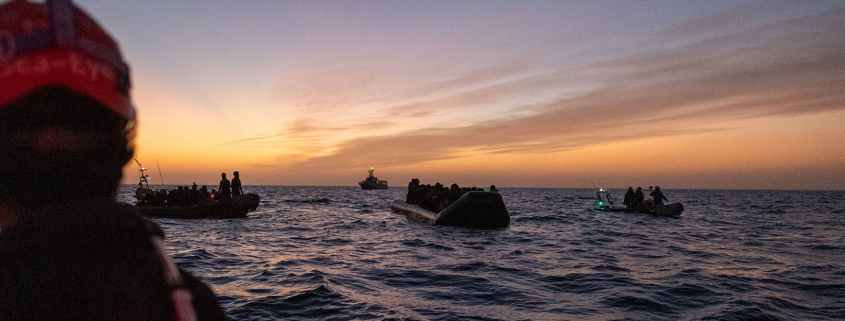
On Friday evening, the crews of the SEA-EYE 4 of Sea-Eye e.V. and the RISE ABOVE of Mission Lifeline e.V. rescued 63 people from an unseaworthy rubber boat and thus from acute danger to their lives. Among those rescued were 12 unaccompanied minors and five women. By the time of the rescue, the people had already been at sea for one and a half days.

The distress case was reported to the authorities by the aid organization AlarmPhone at noon and forwarded to the two rescue ships. After several hours of searching, the boat was found. When the RISE ABOVE reached the boat, the crew of the ship carried out first aid. Subsequently, the crew of the SEA-EYE 4 evacuated the people from the unseaworthy rubber boat in order to provide them with medical care and to supply the people with food, drink and warm clothing.

Rescue

Some of the people rescued suffered chemical burns from gasoline spills on the rubber boat. Many were very weak and suffered from seasickness, so we had to stabilize people first. Numerous people also have older injuries from presumably traumatic experiences. At the moment, all those rescued are in stable condition and out of life-threatening danger,” said Nour Hanna, the mission doctor from German Doctors, describing the state of health of the guests after the rescue.

The rescue operation once again showed how effectively cooperation within the civilian fleet works: “Fleeing across the Mediterranean is particularly dangerous at this time of year because the weather can change quickly. That’s why we are happy that the cooperation between different civil organizations works so well. But it remains unforgivable that this work is still organized by us and our partners, instead of state actors. We therefore maintain the demand for a state-organized sea rescue mission with the clear mandate to save as many lives as possible,” says Gorden Isler, chairman of Sea-Eye e.V.

Rescue
SEA-EYE 4

First mission for Sea-Eye since Giorgia Meloni’s extreme right-wing government took office.

The SEA-EYE 4 departed from Burriana on Wednesday (07.12.2022) for the sixth and final rescue mission in 2022. The ongoing mission is largely made possible by the civilian sea rescue alliance United4Rescue. “Without the help of the alliance, which is supported by more than 850 institutions, the current mission could not be financed,” says Gorden Isler, Chairman of Sea-Eye e.V.

The Regensburg sea rescuers have been suffering from a massive drop in donations for months. A funding of 300,000 € by United4Rescue and further funding of 25,000 € by the UNO-Flüchtlingshilfe and 15,000 € by Civilfleet Support e.V. now enable the SEA-EYE 4 to return to the central Mediterranean. Since the alliance ship set off on its first rescue mission in May 2021, the crews have saved more than 2,300 people from drowning.

We are delighted that, thanks to our support, the SEA-EYE 4 was able to set off on its next mission and will be saving lives again in the coming days,” said Ansgar Gilster, board member of United4Rescue. “No rescue ship should be left in port because there is no money – that’s what we stand for with our broad alliance.

For the SEA-EYE 4, this is the first mission since the change of government in Italy. Already in the first weeks of the extreme right-wing government under Giorgia Meloni, the situation for civil sea rescue organizations in the Mediterranean has rapidly escalated. Prime Minister Meloni, as well as other members of the cabinet, did not only radically ramp up rhetorically. In November, for example, the Minister of the Interior, Matteo Piantedosi, issued an illegal decree in an attempt to massively restrict the fundamental right to asylum and to deny refugees the right to apply for asylum on European soil, contrary to current law.

SEA-EYE 4

In this situation, it is all the more important that we as a civic society stand up for the human right to bodily integrity. We will continue to stand together against the dying in the Mediterranean, and we demand a clear shift of course in refugee and migration policy from politicians,” says Dr Harald Kischlat, Chairman of German Doctors e.V.

The Bonn-based humanitarian aid organization German Doctors e.V. is once again providing the mission doctor on board. The organizations Sea-Eye and German Doctors want to continue working together in 2023 to save as many people as possible from drowning. How often the SEA-EYE 4 will be able to embark in 2023 is uncertain. Sea-Eye received significantly fewer donations this year than in the same period last year. 

We have to emphasize now that we will do fewer missions in the coming year if the situation does not improve quickly. Already the first planned mission in the coming year is seriously endangered,” says Isler.

Disembarkation

Future rescue missions at risk due to increased prices and simultaneous drop in donations

On Sept. 16, 2022, the SEA-EYE 4 arrived in Taranto with 129 rescued people, including 48 unaccompanied minors. The port had been assigned to the rescue ship on Thursday. In the afternoon, the first people, more than half of whom had been on board for 14 days, were able to leave the rescue ship.

During the rescue mission, the crew searched for two maritime emergencies in the Maltese search and rescue zone and in both cases received no assistance from the responsible Rescue Coordination Centre in Malta. One time, when the crew tried to call for information, the Rescue Coordination Centre simply hung up.

The current economic and political situation has led to a decrease in donations of more than 30% for Sea-Eye this year. In connection with the increased prices, especially fuel prices, the finance department and the mission management of Sea-Eye are facing the serious question if and when the next rescue missions can be carried out. So far this year, Sea-Eye has been able to carry out five rescue missions, saving over 800 lives, despite a drop in donations.

Humanitarian organizations also have to face sharply increased costs. With a simultaneous drop in donations, these are two significant and threatening factors that endanger our further missions. At the same time, our missions are just as important in the fall and winter because periods of bad weather are increasing. Fewer rescue ships mean that fleeing across the Mediterranean becomes more dangerous, because escape attempts from Libya still take place,” says Gorden Isler, chairman of Sea-Eye e. V.

In 2022, an average of four people died every day while fleeing across the Mediterranean.

The parties of the three-way coalition had promised in their coalition agreement to take action in order to improve the situation.

So far, these are just nice words that don’t help anyone. We do not need appreciations and euphonious promises. The sea rescue organizations finally need substantial support in order to be able to continue saving lives, and political course corrections that contribute to our work becoming superfluous,” Isler criticizes.

In order to be able to maintain rescue operations in the coming months, Sea-Eye, together with supporters including United4Rescue – Gemeinsam Retten e. V. and #LeaveNoOneBehind, has launched a donation doubling campaign: http://sea-eye4.betterplace.org/.

The authorities are harassing aid organizations and increasing the pressure also financially. This happens because they want to use letting people drown as a deterrent. We must not allow this strategy to work. A wall of dead people is being built and hardly anyone is interested. This is so cruel, this must not be allowed to go down, even in difficult times,” says Erik Marquardt, co-founder of LeaveNoOneBehind, which financially supports Sea-Eye. Erik Marquardt is also a member of the European Parliament’s Greens–European Free Alliance.

Medical Evacuation

82 people are missing

From Sunday to Monday (September 4th-5th), the crew of the rescue ship SEA-EYE 4 searched for a distress case in the Maltese Search and Rescue Zone, which had been reported by AlarmPhone to the SEA-EYE 4 and the Maltese Rescue Control Center. AlarmPhone sent updated coordinates several times until it lost communication with the 82 people.

The Maltese Rescue Coordination Center made no discernible attempts to locate the boat. The Maltese Rescue Coordination Center claimed that they had “no information” during a phone call with an AlarmPhone employee. Finally, the AlarmPhone employee was accused of blocking the phone line for other maritime emergencies.

Due to the size of the search area, it was not possible for the SEA-EYE 4 to find the boat without updated coordinates. There is no information on the whereabouts of the 82 people. Although the maritime emergency occurred in the Maltese Search and Rescue Zone, Malta did not involve the SEA-EYE 4 in a coordinated search.

After intensive days of searching by our crew, we know nothing about the fate of the people who called for help in the Search and Rescue Zone of an EU member state. Had Malta sent a surveillance aircraft and involved us in the search, we might have found the people. At least that is what the Maltese Rescue Center would have done if they had been Europeans in distress at sea,” says Gorden Isler, chairman of Sea-Eye e. V.

Already on September 2nd, the crew of the SEA-EYE 4 rescued 76 people from a small, double-decker wooden boat in distress at sea. The distress case had been previously reported by NADIR of the organization Resqship. Among the rescued people are 17 unaccompanied minors and one child. In the following days, the medical team had to treat several patients in the onboard hospital.

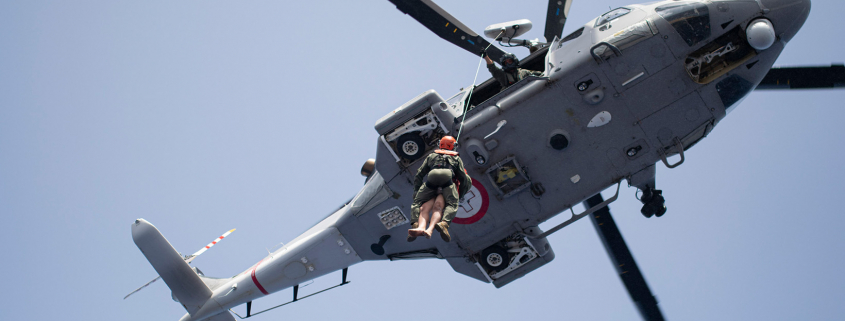
On Tuesday, September 6th, the condition of one patient deteriorated massively. He suffered from severe pain in his abdomen and had a fever. The SEA-EYE 4 then requested a medical evacuation from Malta, whereupon the patient was brought ashore by helicopter for medical treatment.

Yesterday evening (September 6th), the SEA-EYE 4 took over 54 previously rescued people from the RISE ABOVE because it is better equipped to care for them.

The additional 54 refugees – including 30 minors – were very weakened and dehydrated when they were taken on board the RISE ABOVE. For three days they had held out on their boat without food or drink. In the meantime, they have all been stabilized. Since they are young and none of them has a chronic illness, we are confident that the new guests will at least remain physically stable,” explains Dr. Angelika Leist, German Doctors mission physician and ship’s doctor on board the SEA-EYE 4.

German Doctors regularly provides volunteer doctors for the rescue missions of the SEA-EYE 4 and contributes financially to the operation of the onboard hospital, where a three-person team often has to treat dozens of rescued people during rescue missions.

There are now 129 people on board the SEA-EYE 4, including 48 minors, 47 of whom are unaccompanied. The crew has asked for a port of safety in Italy.

SEA-EYE 4

Ship sponsorship enables further mission despite declining donations

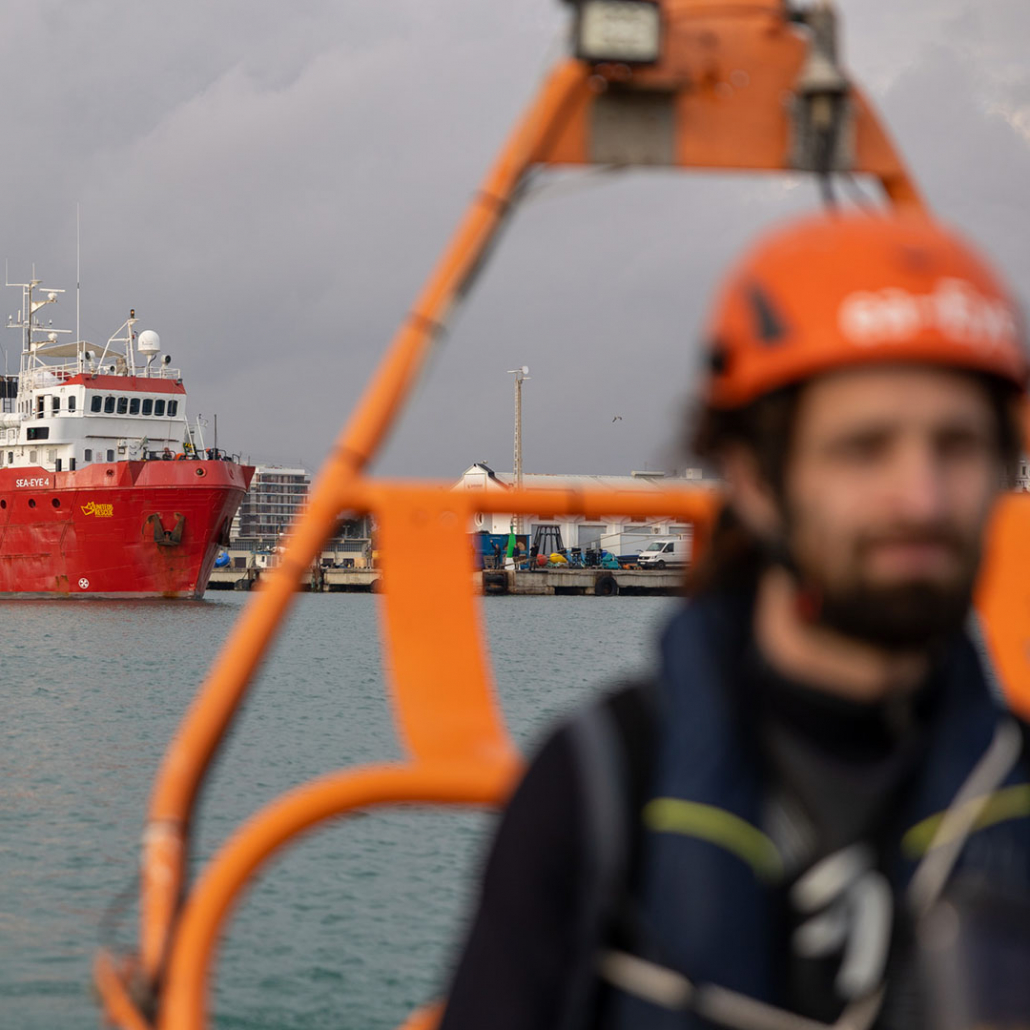
The rescue ship SEA-EYE 4 has left Trapani for the central Mediterranean. The fifth rescue mission this year was made possible to a large extent by the city of Bochum, which took over a ship sponsorship for the SEA-EYE 4 rescue ship in July. The sponsorship includes funding made up of budget money from the city (€ 30.000) as well as donations from the civilian population (€ 37.714, as of Aug. 30, 2022). In total, the “Bochum Saves” campaign thus resulted in funding of € 67.714, which was used for the mission preparations of the SEA-EYE 4.

Bochum’s support came at the right time. We are currently experiencing a simultaneity of various crises, which has also led to an overall decline in donations for Sea-Eye. Bochum has shown how local commitment can find a way out of the solidarity crisis at the EU’s external borders. We hope that many more municipalities will join in,” says Gorden Isler, chairman of Sea-Eye e. V.

In the summer months, a particularly large number of people dare to flee the civil war country of Libya. In Tripoli, fights broke out again over the weekend in the wake of a conflict between Prime Minister Abdul Hamid Dbeibah and former Interior Minister Fathi Bashagha, resulting in numerous deaths.

Dr. Angelika Leist, German Doctors mission physician and ship’s doctor, accompanies the current Sea-Eye mission: „I am involved on the Sea-Eye 4 because it must not be that people fleeing from a life not worth living are put in danger of their lives and no official authority helps them. Of course, civil emergency rescue can only be a temporary solution. Actually, the EU countries should jointly organize a sea rescue and not commission the so-called Libyan coast guard with push-backs.

Angelika von German Doctors

In principle, of course, it would be desirable if the Western countries, together with the countries of origin, ensured that the living conditions on the ground become such that people no longer have to flee. But as long as this is not the case, I am happy to be able to help as a German Doctors mission doctor. My last medical mission in the refugee camps on Thessaloniki certainly helps me to understand the guests on board the Sea-Eye 4 and their moving causes better,“ says Leist.

German Doctors regularly provides volunteer doctors for the rescue missions of the SEA-EYE 4 and contributes financially to the operation of the onboard hospital, where a three-person team often has to treat dozens of rescued people during rescue missions.

Sea-Eye criticizes unequal treatment of people seeking protection

After the 476 refugees had spent a week in cramped quarters on the SEA-EYE 4, disembarkation began today, 22.06.2022, in Messina. Yesterday, the Italian Coast Guard had assigned Messina as a port of safety to the SEA-EYE 4.

The crew of the SEA-EYE 4 had rescued 494 fleeing people from various boats in distress during the previous week. While waiting for a port, 18 people had to be evacuated from the ship for medical reasons. The people had fled the Libyan civil war in unseaworthy boats. However, many had previously fled their countries of origin. The people come from 23 different countries of origin. Among them Afghanistan, Ethiopia, Eritrea, Mali or Syria.

There are also long-term armed conflicts or even wars in countries such as Afghanistan, Ethiopia, Eritrea, Libya, Mali or Syria. Currently, however, there are only safe passages to the EU for people fleeing Ukraine. People from all other countries of origin must continue to risk dying at European borders for the chance of safety and an asylum process. This is clearly structural racism. We need safe passages for all people seeking protection, no matter what the color of their skin or the tyrants they are fleeing,” says Gorden Isler, chairman of Sea-Eye e. V.

Medical Evacuation

Italian coast guard evacuates four people

The SEA-EYE 4, whose crew rescued 494* people from distress at sea during the week, arrived in Sicily on Friday morning, June 17. Due to the large number of people, it is difficult for the three-person medical team to provide adequate care to all persons. While the majority of people are in stable condition, there are many patients who require more comprehensive medical care. The Italian Coast Guard therefore evacuated four people from the ship at noon on Friday due to their health condition.

One patient who was evacuated is eight months pregnant, but has complications and can no longer feel her baby. She also has burns on her legs. Another person has a broken hand and needs an X-ray and further treatment. One person with epilepsy ran out of long-term medication. A fourth evacuated person is suffering from severe burns.

Overall, several patients have burns and some patients had inhaled fumes from fuel on the boats. Many patients are in physical discomfort as a result. Some people show signs of severe exhaustion and even trauma. Other patients were treated for hypothermia. After the evacuation of a pregnant woman, two pregnant women are now still on board. One woman is eight months pregnant and one woman is four months pregnant. Their condition is currently stable.

Medical Evacuation

With such a high number of vulnerable people on board, there is also a high demand for medical care, which our medical team cannot cover on its own in the long term. Thanks to our cooperation with the Bonn-based aid organization German Doctors, we are very well positioned for first aid and emergency situations – but not all further treatments and necessary examinations can be carried out in our onboard hospital. Currently, for example, we are treating many people with wounds and burns caused by contact with a salt-water fuel mixture in the boats, so that our dressing material is running low. To avoid further medical evacuations, all people on board need a port of safety and medical assistance as soon as possible,” said Gorden Isler, Chairman of Sea-Eye e. V.

Medical Evacuation

*Note: On June 15, the total number of rescued was reported as 492. A later count recorded 494 people. Due to today’s evacuation of four patients there are currently 490 rescued people on board SEA-EYE 4.