
Nach zwei Tagen auf See: 24 Menschen aus Seenot gerettet
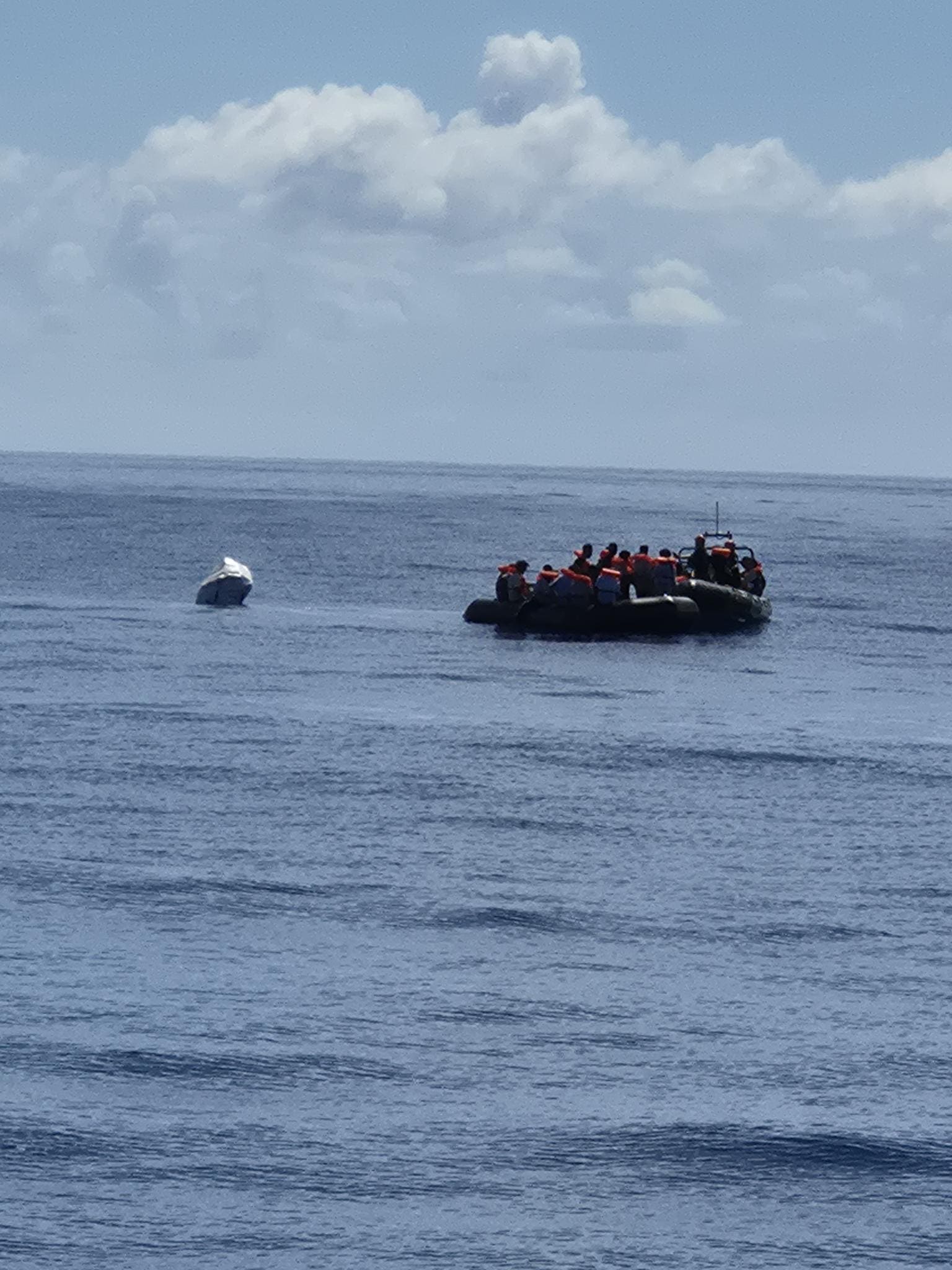
The 24 people had already been drifting in an unseaworthy inflatable boat in the Mediterranean for more than two days when the crew of the SEA-EYE 5 learned of their distress on Monday morning (21 September 2026). Among them were women and a three-year-old child. There was no life-saving equipment on board, and the boat had a strong smell of fuel.
At 10:15 am, the crew of the SEA-EYE 5 set off for the reported position. From the air, Sea-Watch’s Sea Bird 2 confirmed the emergency and spotted the black inflatable boat, with around 30 people on board.
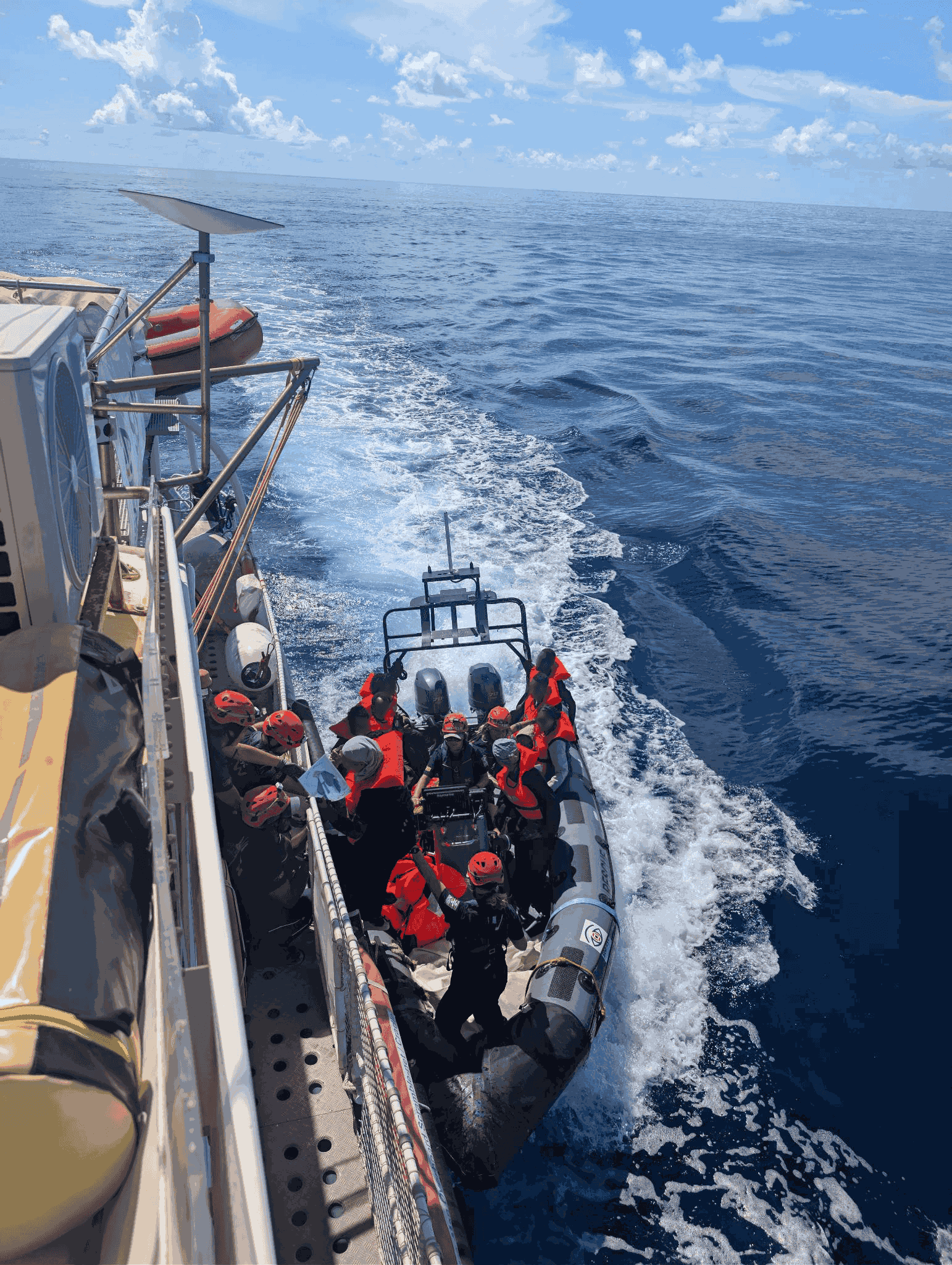
At around 11:30 am, the SEA-EYE 5 reached the position and the RHIB “Sierra” was launched. The RHIB team approached the people in the inflatable boat, distributed life jackets and began bringing them on board the SEA-EYE 5.
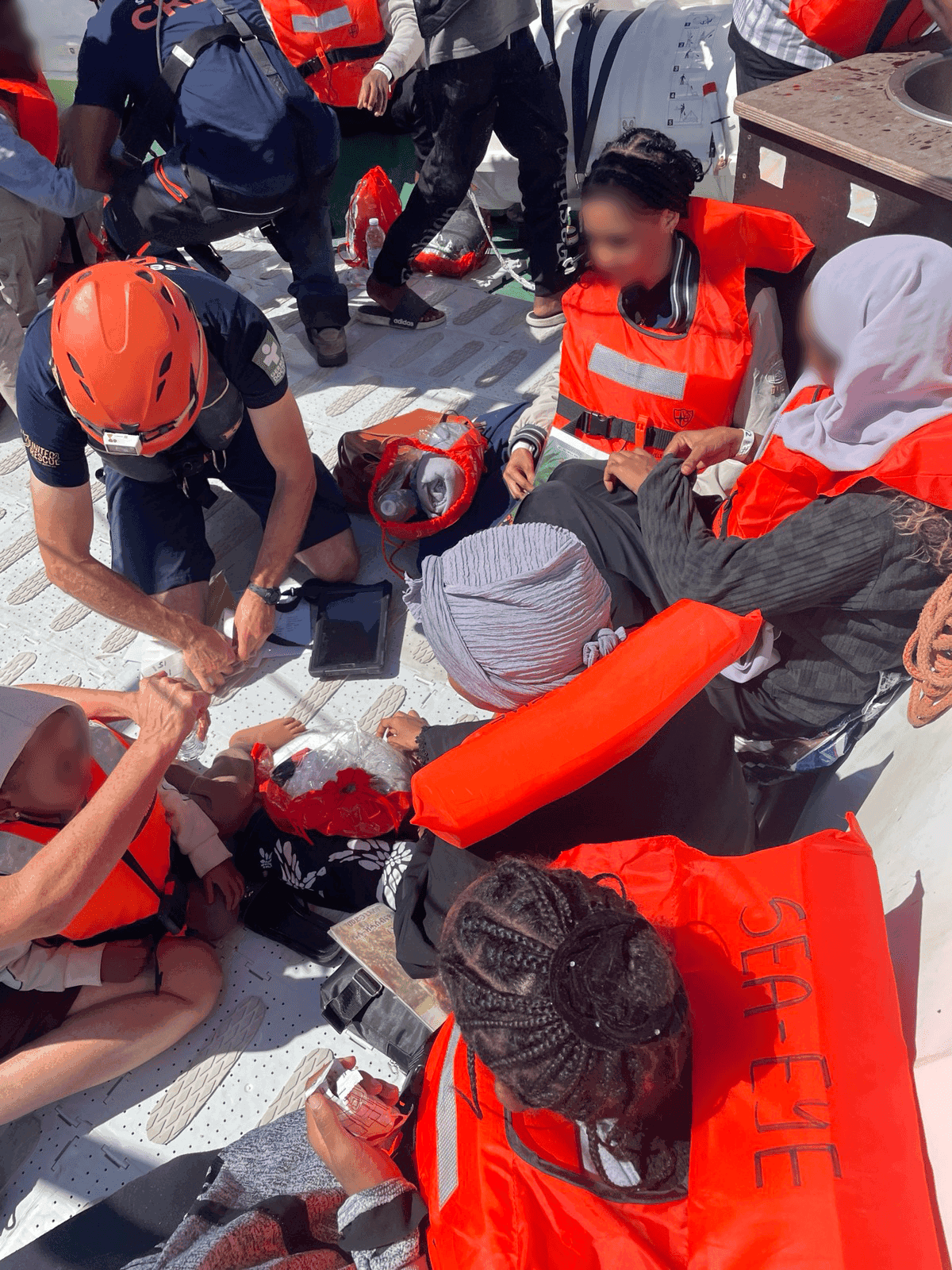
The rest of the crew were on hand to care for the people once they came aboard, including the ship’s doctor, Dr Christin Linderkamp from German Doctors, who is responsible for medical care on board. She explained:
“The 24 survivors had been at sea for two days and were completely exhausted. Among them was a three-year-old child who was severely dehydrated and very weak. As a paediatrician, I was able to stabilise her condition. We were incredibly fortunate to find them in time.”
Within an hour, the RHIB crew had safely brought all people on board the SEA-EYE 5. There, the team provided them with medical care and support while the SEA-EYE 5 set course for the port of safety.
Saving Lives at Sea Takes Teamwork
A rescue like this is a team effort – across organisations and areas of operation. A distress call is passed on, people in the air keep watch, a rescue vessel sets off, the RHIB approaches the boat in distress, and medical care and a safe place are ready and waiting on board.
In this rescue, people on land, in the air and at sea worked together. Sea-Watch’s Sea Bird 2 was able to confirm the emergency from the air. The crew of the SEA-EYE 5 was able to reach the people and bring them safely on board.
For people in distress at sea, this moment is crucial. After at least two days at sea, it means one thing: they have survived the dangerous crossing.
The Italian authorities initially assigned Palermo as port of safety. Due to technical problems, the crew requested permission to proceed to Lampedusa instead. The request was approved, and on Tuesday afternoon (22 September 2026), all 24 people were able to disembark safely on Lampedusa.
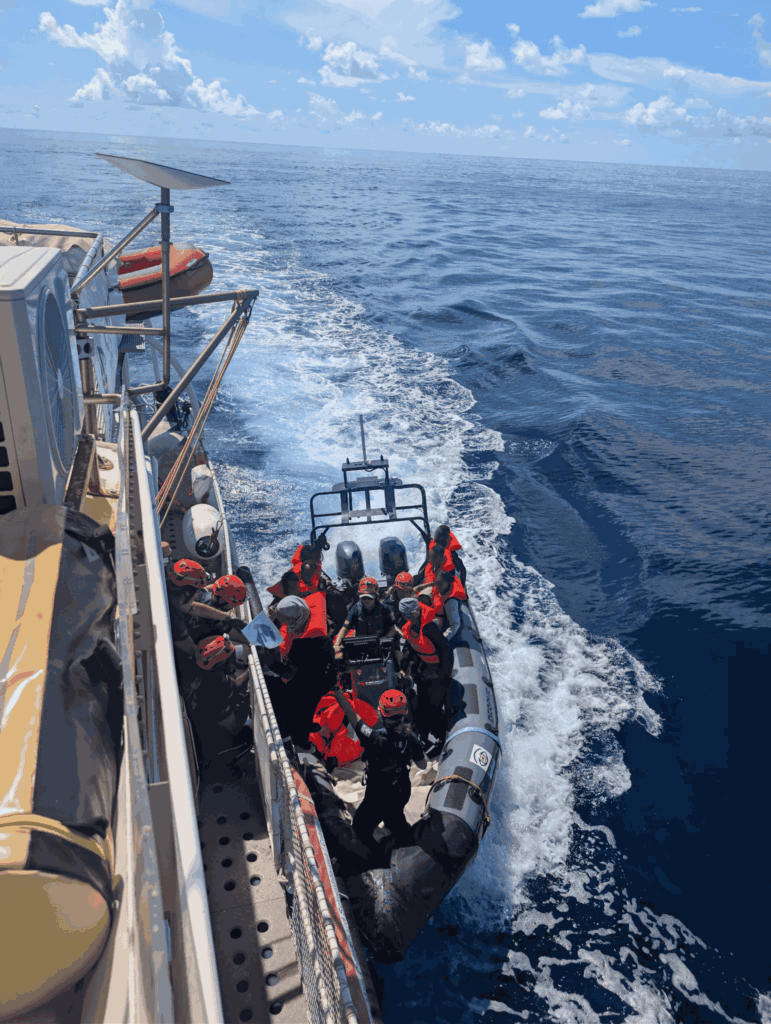
RHIB approaches SEA-EYE 5
A RHIB with crew and survivors on board approaches a rescue vessel to bring the people on board to safety
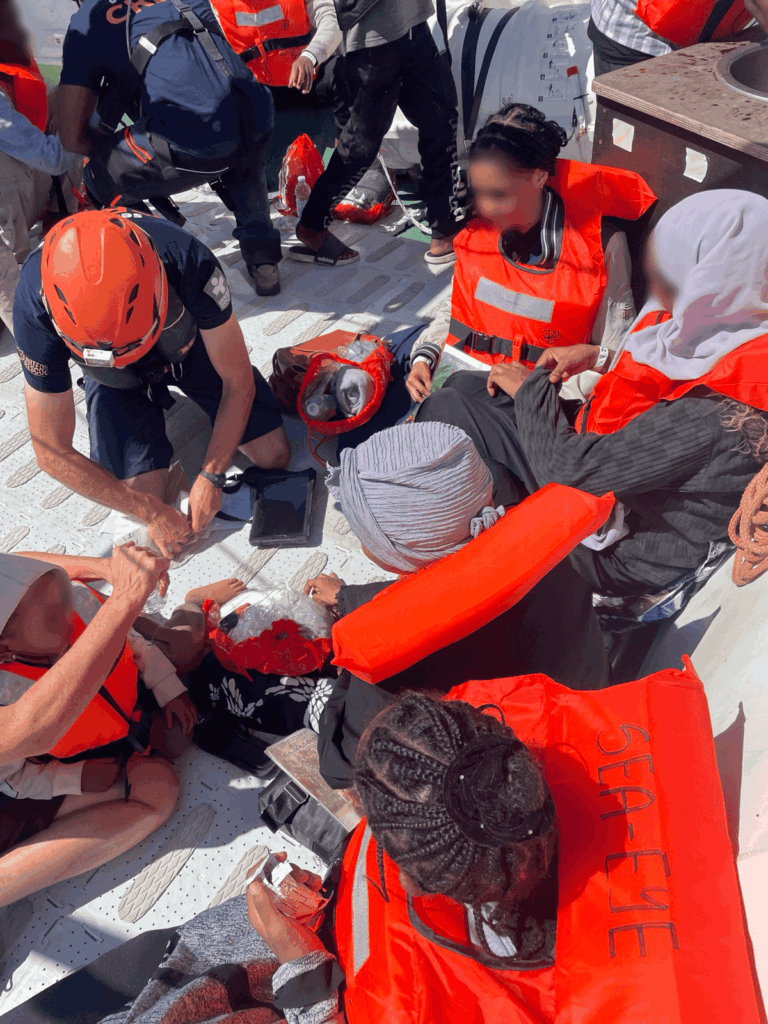
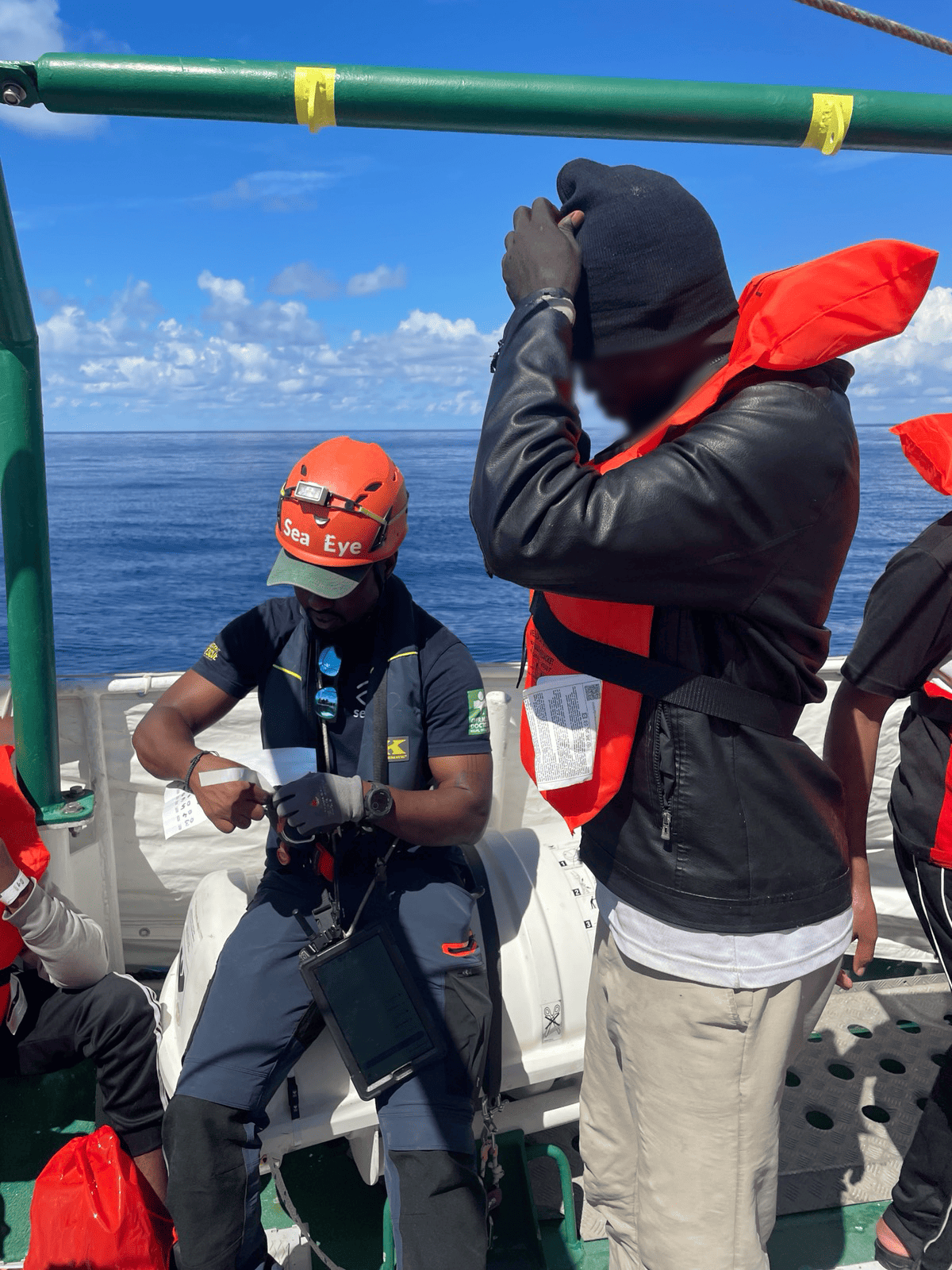
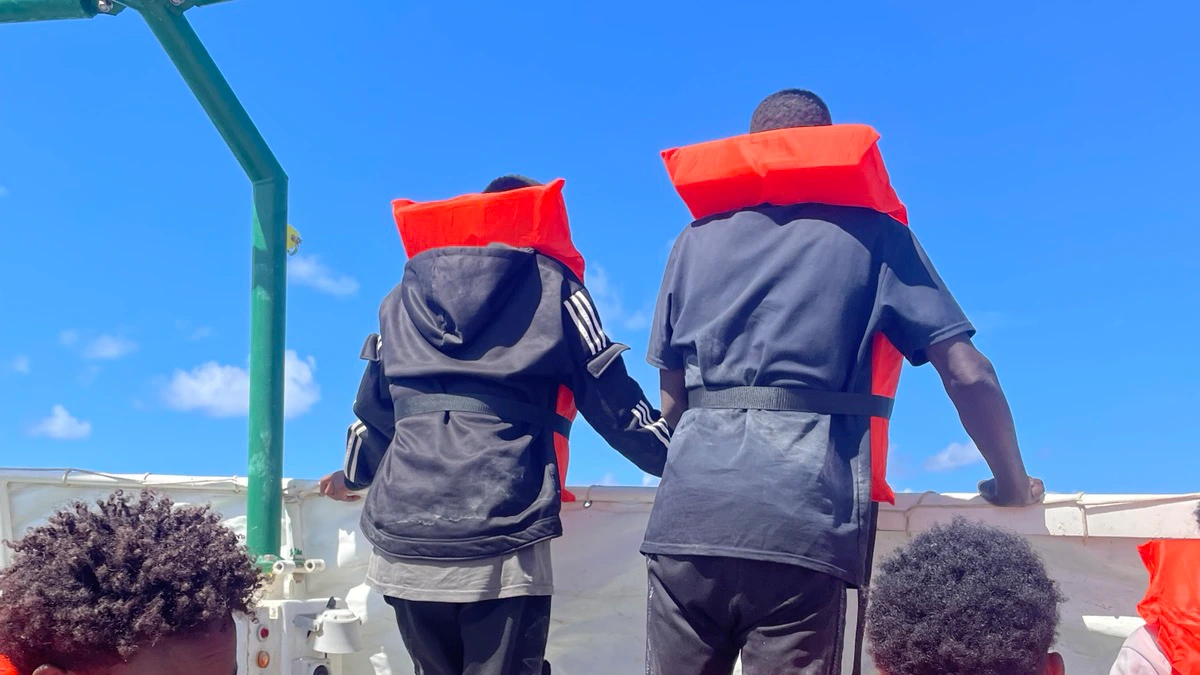
Post-rescue situation on board the SEA-EYE 5
Post-rescue situation on board a rescue vessel. People wearing life jackets are on deck and are receiving first aid.
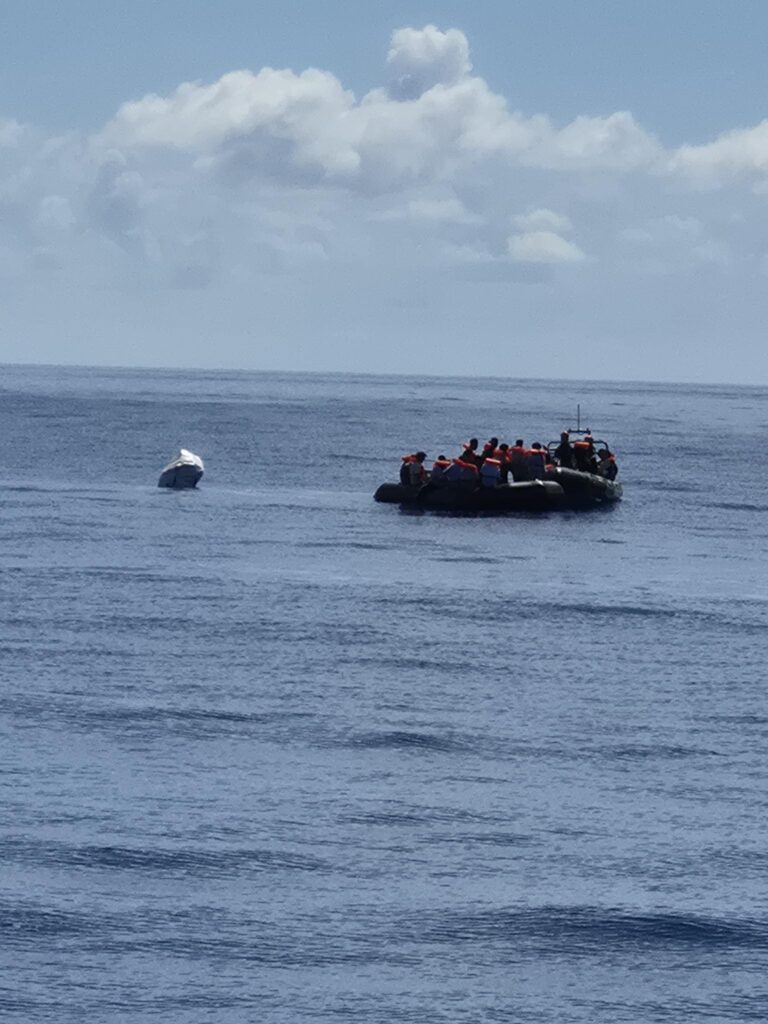
During the rescue
RHIB and a rubber boat in distress on the open sea during the rescue
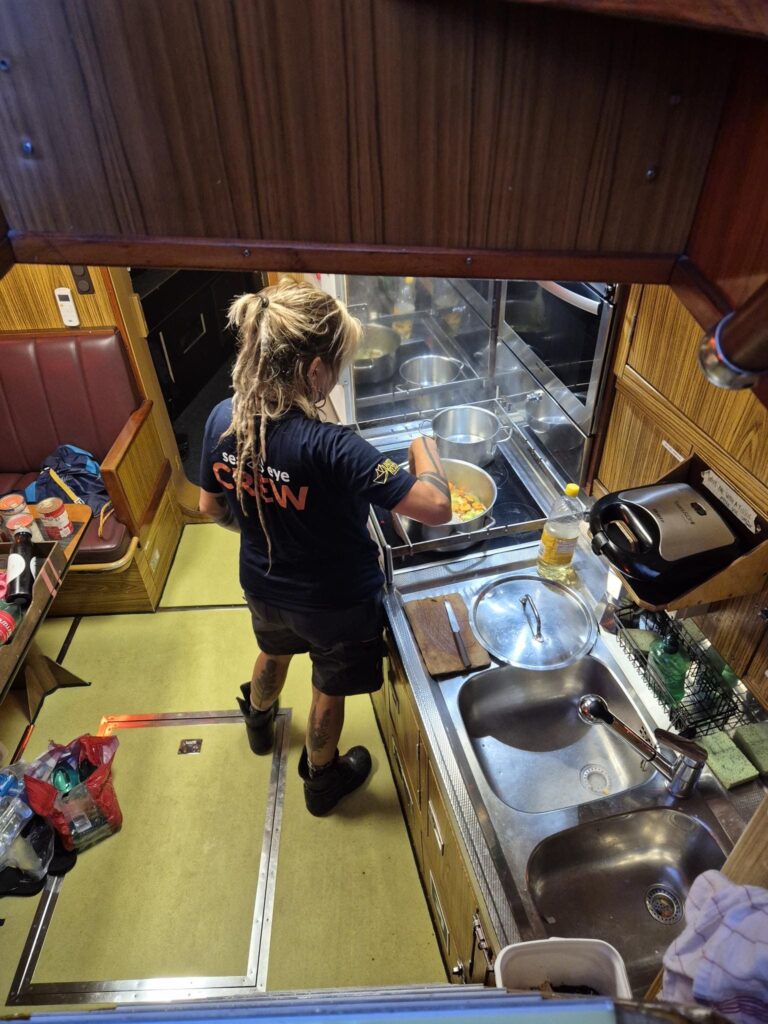
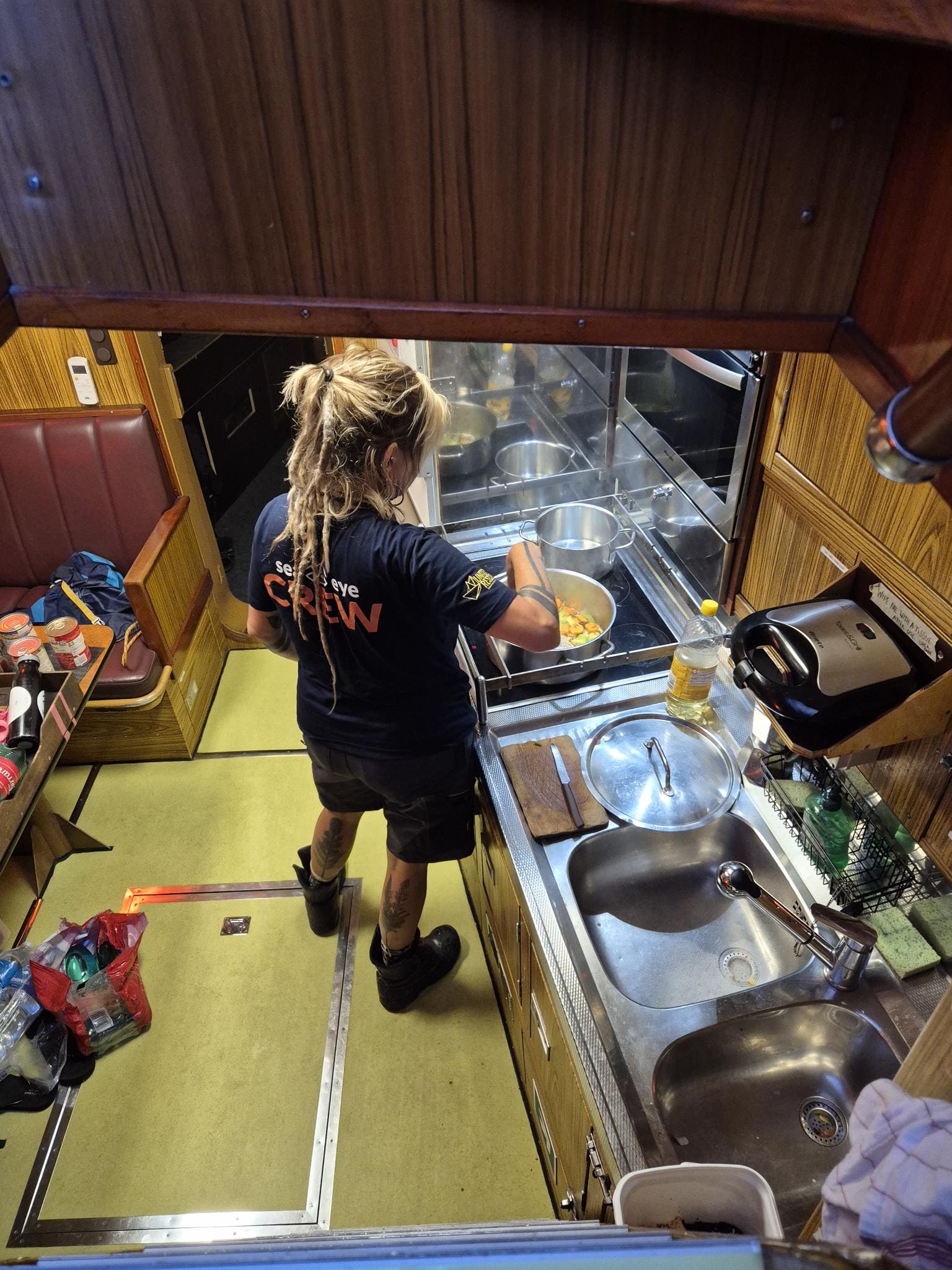
Crew preparing food
A person wearing a Sea-Eye crew shirt is standing in the kitchen of the SEA-EYE 5, preparing food
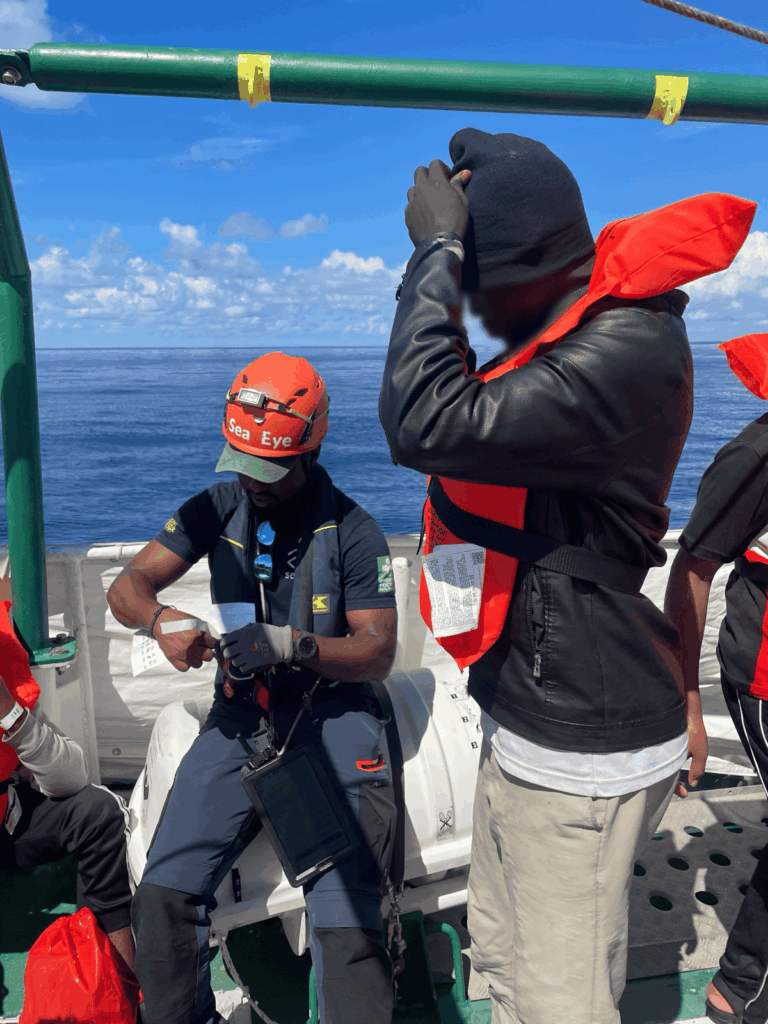
Crew member with a survivor
A crew member of the SEA-EYE 5 together with one of the survivors on board the SEA-EYE 5