
Coordinated cooperation between rescue aircraft and rescue vessel under extreme weather conditions
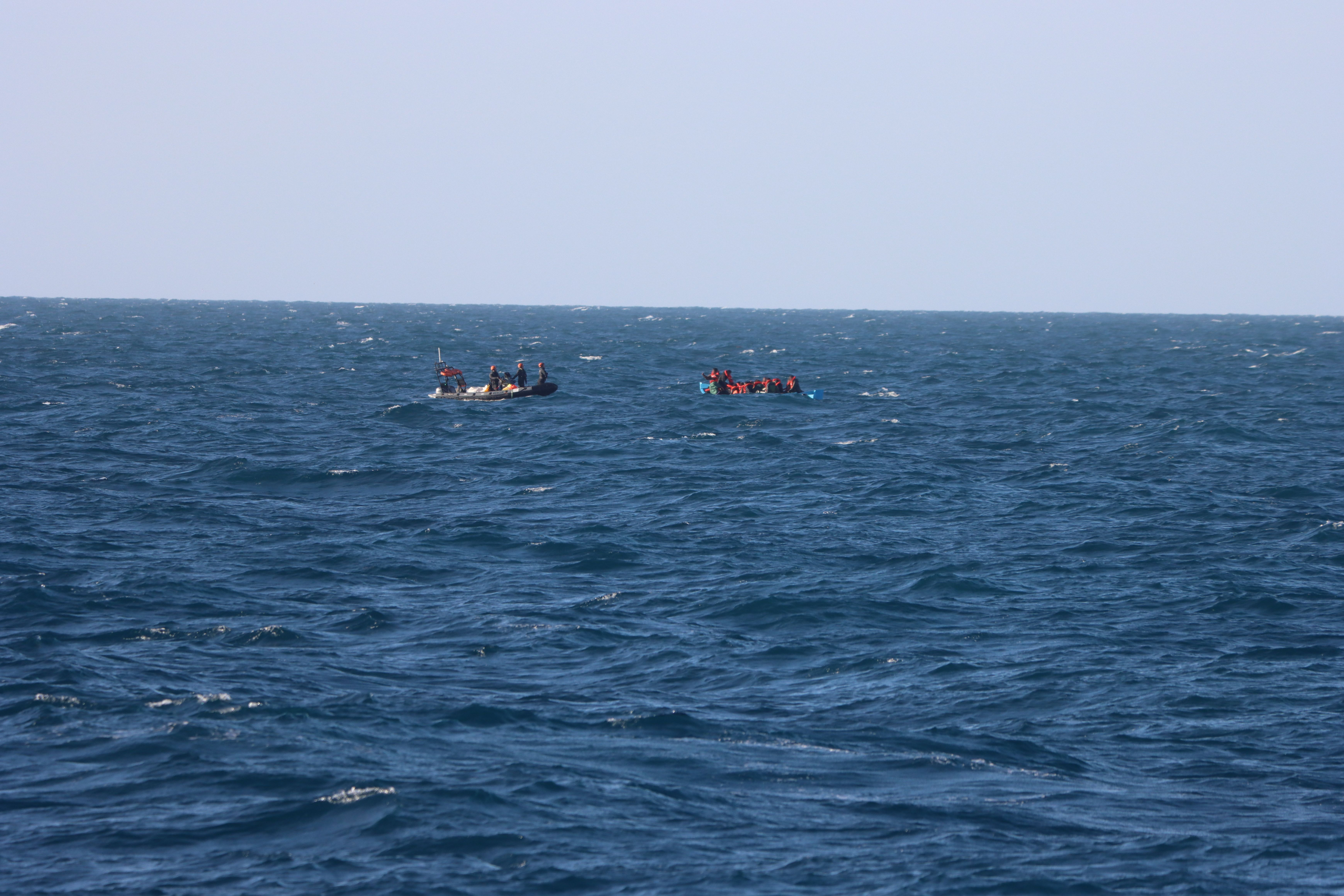
On Monday afternoon, the crew of SEA-EYE 5, together with the Colibri 2 rescue aircraft operated by Pilotes Volontaires, rescued a total of 47 people from acute distress at sea in the Mediterranean. The people were on an overcrowded wooden boat and were safely brought on board following a coordinated rescue operation.
Severe winter storms, in particular the exceptionally violent Cyclone Harry, have significantly hampered patrols by civilian search and rescue organisations in recent weeks. Despite the extreme weather conditions, an unusually high number of people fleeing attempted the crossing this winter – hundreds of people are currently considered missing according to the organisation “Refugees In Libya” .
On February 2, 2026, SEA-EYE 5 was patrolling in the Maltese SAR zone when, at 1:00 PM, a distress alert was received from Pilotes Volontaires. Thanks to aerial reconnaissance by Colibri 2, the boat was located.
“Especially in the winter months, conditions in the Mediterranean are particularly challenging for rescue organisations. This makes close, coordinated cooperation between civil society actors on land, at sea and in the air all the more important. The cooperation between Pilotes Volontaires and Sea-Eye clearly demonstrates how coordinated civil society work saves lives”, says Anna di Bari, Executive Board member of Sea-Eye e.V.
Rescue operations began at 4:10 PM. By 5:30 PM, all 47 people had been safely brought on board SEA-EYE 5.
Esther Kurbach from German Doctors, who leads medical care on SEA-EYE 5, reported directly from on board: “Many of the rescued people came on board already severely hypothermic, dehydrated, and suffering from scabies or painful fuel burns caused by the combination of fuel and salt water. Although their medical condition is stable after initial measures, they urgently need care on land.”
Nevertheless, the Italian Maritime Rescue Coordination Centre assigned SEA-EYE 5 the port of Vibo Valentia, which is 32 hours away.
“Assigning the distant port of Vibo Valentia means nothing less than further, completely unnecessary hardship for them. The long journey continues to expose them to the cold, and the heavy swell also means that many people on board are suffering from severe seasickness, which weakens them even further.” Esther Kurbach continued.
On the night from Tuesday to Wednesday, all survivors were able to disembark safely in Vibo Valentia.

